
Financial Crash Expert: In 3 months We’ll Enter A Famine! If Iran Doesn’t Surrender It's The End!
Professor Steve Keen is an economist specializing in financial instability, monetary dynamics, and the history of economic thought - making him a minority in economics since most economists ignore money completely.

Episode


- 01
Iran has strategically divided its military into 31 regional divisions to prevent decapitation attacks, making conventional defeat nearly impossible
- 02
The Strait of Hormuz controls 20-30% of global fertilizer and helium supply - closure could trigger worldwide famine and semiconductor shortages
- 03
Professor Keen predicts 5% probability of nuclear escalation, warning that destroying Iran would require weapons equivalent to bombing Western Europe
- 04
Trump's oil market announcements may constitute pump-and-dump schemes, manipulating prices for personal and allies' financial gain
- 05
AI investment bubble shows classic boom-bust patterns with 90% startup failure rate and unsustainable 5:1 spending-to-revenue ratios
- 06
Universal Basic Income becomes necessary as AI threatens to eliminate 50% of jobs at unprecedented speed compared to previous industrial revolutions
- 07
China's cooperative-competitive model offers better long-term sustainability than pure capitalist systems focused on short-term profits
Get the latest ideas from The Diary Of A CEO.
Plus the best new takeaways from other top podcasts — read in minutes, not hours.
By continuing, you agree to podbrain's Terms and Privacy Policy.
These notes may contain occasional inaccuracies. Learn how podbrain notes are made
Professor Steve Keen is an economist specializing in financial instability, monetary dynamics, and the history of economic thought - making him a minority in economics since most economists ignore money completely.
The conversation explores five potential scenarios for ending the Iran-Israel-US conflict, ranging from nuclear escalation to regional power shifts. Keen analyzes Trump's motivations, Iran's military preparedness, and the global economic vulnerabilities exposed by this conflict.
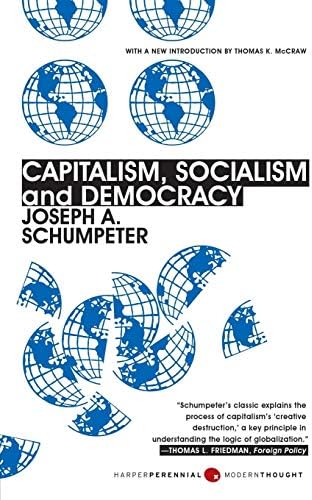
The discussion expands to examine AI's economic disruption patterns, drawing parallels to historical boom-bust cycles described by economists like Capitalism, Socialism and Democracy author Joseph Schumpeter, while addressing the unprecedented scale of potential job displacement and the need for systemic economic reforms.
Iran's Strategic Military Decentralization Against Decapitation
Iran has divided its military into 31 regional divisions corresponding to its provinces, each with independent resources, missiles, and production systems to prevent decapitation attacks that worked against Iraq's centralized command structure.
"You've got to take out the whole 31, and then they'd have that sub-area. So the only way you can beat the country is by literally bombing it back to the Stone Age" - Steve, explaining Iran's defensive strategy.
Iran's terrain covers more than half the size of Western Europe with 90 million people and mountainous geography that makes conventional warfare extremely difficult for invading forces.
Strait of Hormuz: Global Production Chokepoint Crisis
The 21-kilometer Strait of Hormuz controls 20-30% of global fertilizer, helium, and oil supply, with Iran now blocking passage based on countries' political positions toward Iran.
Helium shortage threatens semiconductor production as South Korea gets 65% of its helium from Qatar and produces two-thirds of world's memory chips, with expert Phil Kornblutch warning of 2-3 month production shutdown.
"If we didn't have fertilizer at all, guess how many billion people the planet could actually support? Between one and two" - Steve, explaining fertilizer's critical role in supporting current global population.
Energy consumption and GDP move in lockstep with virtually identical magnitude over 40 years, meaning 5-10% energy loss from this conflict could trigger equivalent global economic contraction.
Five War Scenarios: From Nuclear Winter to Regional Realignment
Scenario 1 (5% probability): Nuclear destruction of Iran would require hundreds of weapons equivalent to 20 million tons of TNT each, potentially ending civilization through nuclear winter.
Scenario 2 (highly likely): Iran destroys Gulf power infrastructure, making Saudi Arabia, Qatar, and Dubai uninhabitable while eliminating their energy contributions to global economy.
Scenario 3 (Samson Doctrine): Israel uses nuclear weapons against the world if facing existential defeat, following the biblical story of Samson destroying the temple.
Scenario 4 (most probable): Iran disables Israel's nuclear weapons using advanced missile technology, preventing nuclear escalation while maintaining conventional warfare capabilities.
Trump's Market Manipulation and Political Psychology
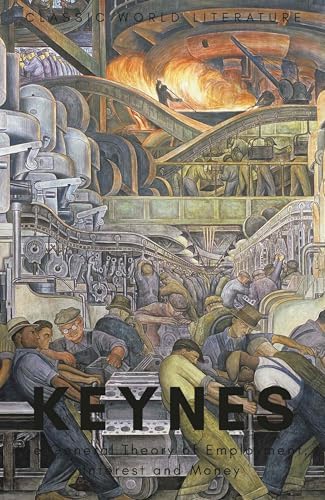
Trump's oil market announcements follow pump-and-dump patterns, with The General Theory of Employment, Interest and Money author Keynes's principle that immediate market timing matters more than long-term value.
"He's trying to drive up the oil price, tell friends beforehand that he's about to make an announcement which will cause the price to fall, and he's just oscillating this way up and down" - Steve on Trump's market strategy.
Narcissistic personality disorder explains Trump's behavior patterns: constant need for attention, inability to admit mistakes, and projection of his own psychology onto Iranian leadership.
Nuclear War A Scenario author Annie Jacobsen's research reveals Trump has sole authority to launch nuclear weapons without Congressional consultation, requiring only the nuclear football briefcase.
AI Economic Bubble: Classic Boom-Bust Cycle at Unprecedented Scale
Big tech companies spending $720 billion on AI infrastructure in 2026 with 5:1 spending-to-revenue ratio, following Capitalism, Socialism and Democracy author Schumpeter's boom-bust cycle theory.
AI startup failure rate hits 90% in 2026, significantly higher than 70% average for general technology, with 95% of enterprise AI pilots failing to reach production.
"This is the first technology which implies you can actually virtually eliminate labor as necessary for reducing output" - Steve on AI's unprecedented employment threat affecting 50% of jobs.
Entry-level positions show 13% decline in hiring as employers increasingly choose AI agents over human workers for routine tasks, fundamentally changing recruitment decisions.
Universal Basic Income and Economic System Reform
Universal Basic Income becomes necessary as AI eliminates jobs at unprecedented speed, providing survival income while allowing people to pursue entrepreneurship or reduced working hours.
China's cooperative-competitive model balances individual gain with collective focus, contrasting with Western capitalism's excessive competition and short-term profit orientation.
"We need to be more like the East in the sense of the idea of yin and yang. You have to have both. Cooperation and competition" - Steve on economic balance.
Individual preparation strategies include solar power installation and food production capability to achieve self-sufficiency against global supply chain vulnerabilities.

These notes may contain occasional inaccuracies. Learn how podbrain notes are made
.svg)