
Brain Rot Emergency: These Internal Documents Prove They’re Controlling You!
Jonathan Haidt, social psychologist and author of The Anxious Generation, joins Dr. Aditi Nerurkar, Harvard physician and stress expert who wrote The Five Resets, to examine...

Episode


- 01
Short-form videos cause a 40% drop in memory accuracy after just 10 minutes, demonstrating measurable 'brain rot' effects - Jonathan
- 02
91% of people showed improved attention and mental health after two weeks without internet access on their devices
- 03
The Anxious Generation reveals that people born after 1995 face unprecedented anxiety due to growing up on social media platforms
- 04
AI chatbots create an 'echo chamber of one' where users unknowingly talk to amplified versions of themselves
- 05
Social media executives don't let their own children use the platforms they design to be addictive for millions of kids
- 06
December 10th, 2024 marked a global tipping point when Australia's social media ban for under-16s proved regulation was possible
- 07
The prefrontal cortex doesn't fully develop until age 32, not 25, making young adults more vulnerable to digital addiction
- 08
Meta's internal research shows they know Instagram is 'a drug' and they're 'basically pushers' causing reward deficit disorder
Get the latest ideas from The Diary Of A CEO.
Plus the best new takeaways from other top podcasts — read in minutes, not hours.
By continuing, you agree to podbrain's Terms and Privacy Policy.
These notes may contain occasional inaccuracies. Learn how podbrain notes are made
Jonathan Haidt, social psychologist and author of The Anxious Generation, joins Dr. Aditi Nerurkar, Harvard physician and stress expert who wrote The Five Resets, to examine the devastating impact of short-form videos and social media on human attention and mental health.
The conversation explores how platforms like TikTok and Instagram Reels are literally rewiring brains through neuroplasticity, creating what researchers call 'brain rot' - measurable cognitive decline from consuming high-volume, low-quality video content. Haidt argues this represents the largest threat to humanity, while Nerurkar provides the medical perspective on how infinite scrolling triggers our amygdala and suppresses executive function.
Both experts discuss practical solutions, from deleting addictive apps to implementing phone-free schools, while warning about the emerging threat of AI chatbots that will hack human attachment systems. The discussion covers recent legislative victories like Australia's social media ban and the urgent need for collective action before AI companions create an even more isolated generation.
The Neuroscience Behind Short-Form Video Addiction
Short-form videos trigger a 'primal urge to scroll' by activating the amygdala, our brain's alarm system designed for survival, creating chronic hypervigilance as we scan for danger through endless content consumption.
A Munich study found that just 10 minutes of TikTok viewing dropped memory accuracy from 80% to 49% - a nearly 40% decline that demonstrates measurable 'brain rot' effects on cognitive function.
The amygdala and prefrontal cortex exist in tension - when the amygdala is activated by scrolling, it suppresses the prefrontal cortex responsible for impulse control, memory, planning, and complex problem solving.
Touchscreen devices function as 'Skinner boxes' that train the brain through variable ratio reinforcement, unlike television which puts viewers in a passive 'transportation' state without behavioral conditioning.
Why Children Are Uniquely Vulnerable to Digital Harm
The Anxious Generation documents how people born after 1995 show unprecedented rates of anxiety and depression because they went through puberty on social media platforms designed for addiction.
Human childhood includes a long period of cultural learning where neurons gradually connect based on real-world experiences, but iPads and smartphones hijack this process and prevent proper attention development.
The prefrontal cortex doesn't fully mature until age 32, not 25 as previously thought, meaning young adults remain vulnerable to digital manipulation much longer than expected.
Educational test scores peaked in 2012 and declined before COVID, with the bottom 50% of students most affected by laptops and tablets that became distraction devices rather than learning tools.
The Business Model Driving Digital Addiction
Meta's internal documents reveal executives saying 'Instagram is a drug' and 'we're basically pushers' causing 'reward deficit disorder' because users binge so much they can't feel reward anymore.
Social media platforms follow an 'inshittification' process: first attract users with appealing content, then squeeze users to pay advertisers, then squeeze advertisers to maximize profit for shareholders.
TikTok's algorithm creates extreme view variance - users with millions of followers can get 10,000 or 10 million views unpredictably, indicating more aggressive retention mechanisms than other platforms.
All major platforms are pivoting to short-form video as their primary strategy, with Disney Plus, Netflix, and streaming services breaking long-form content into addictive short segments.
The Emerging Threat of AI Chatbots and Companions
AI chatbots create an 'echo chamber of one' where users think they're getting wise, compassionate advice but are actually talking to amplified versions of themselves in a 'funhouse mirror' effect.
The number one use case for AI chatbots is mental health therapy and companionship, not productivity, with platforms like 'AI is my boyfriend' attracting 45,000 Reddit users seeking romantic relationships with bots.
Bot Brain How to Stay Calm, Resilient, and Human in the Face of AI will explore how chatbots are forming attachments through oxytocin release, fundamentally reshaping human connection patterns.
AI companions will hack the human attachment system more devastatingly than social media hacked attention, creating internal working models based on always-available AI rather than inconsistent human caregivers.
Legislative Victories and the Path Forward
December 10th, 2024 marked a global tipping point when Australia's social media ban for under-16s took effect, proving regulation was possible and inspiring similar laws in Indonesia, France, and other countries.
When Everyone Knows That Everyone Knows explains how private knowledge becomes public simultaneously - Australia's success showed the world that protecting children from social media was both necessary and achievable.
The movement has been driven primarily by mothers who 'felt the kids being pulled away' viscerally, leading to bipartisan support from governors in both red and blue states.
Haidt proposes four norms: no smartphone before high school, no social media before 16, phone-free schools, and more real-world independence and free play for children.
Practical Solutions for Reclaiming Attention
The most transformative change is deleting short-form video apps from phones entirely - 'the proper amount of short-form video consumption for human flourishing is zero' - Jonathan.
Three essential steps to reclaim attention: establish morning and evening routines without phones, shut off almost all notifications, and remove all 'slot machine apps' that create compulsive use.
The Five Resets recommends grayscaling phones and using geographic boundaries - keeping devices out of arm's reach prevents 'brain drain' where mere proximity affects the prefrontal cortex.
The 'rule of two' suggests implementing only two behavioral changes at once, as the brain can only handle limited new patterns while rewiring takes eight weeks to establish.
Rediscovering Meaning in a Digital World
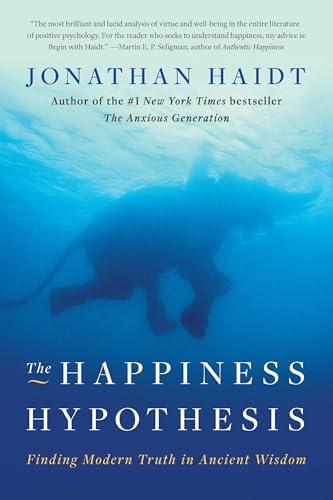
The Happiness Hypothesis reveals that meaningful life comes from three 'betweens': relationships with others, purposeful work, and connection to something larger than yourself - all threatened by digital isolation.
Young people increasingly report 'my life feels meaningless' because they spend hours consuming content rather than doing useful things for others - if you disappeared, would the world change?
The prescription to 'live a lifetime in a day' involves spending time in childhood play, productive work, solitude, and community connection to create eudaimonic rather than hedonic happiness.
The Amazing Generation teaches children ages 8-13 how to be rebels against corporate control, with parents reporting kids reading it and saying 'I don't want a smartphone, just give me a flip phone.'

These notes may contain occasional inaccuracies. Learn how podbrain notes are made
.svg)