
You Have To Be Both These Things | The Long Way Around
This episode of the Daily Stoic Podcast features host Ryan Holiday, author of Lives of the Stoics, Stillness Is the Key, and...



- 01
Marcus Aurelius in Meditations 12:1: 'You could enjoy this very moment, all the things you're praying to reach by taking the long way around, if you'd stop depriving yourself of them.'
- 02
Cato's fatal flaw, detailed in Lives of the Stoics, was principled inflexibility — his inability to compromise helped doom the Roman Republic he sought to preserve.
- 03
Marcus Aurelius learned from teacher Apollonius that 'a man can both show strength and flexibility' — wisdom is knowing when to stand firm and when to bend.
- 04
Joseph Heller's response to Kurt Vonnegut, as recounted in Stillness Is the Key: 'I have something he doesn't have — I have enough.'
- 05
Freedom, happiness, and the respect of peers are not destinations requiring long journeys; Stoics argue all are available immediately through your own choices.
- 06
Ryan Holiday on operating from fullness: 'I'm trying to do it from a place of enoughness and fullness, not a place of emptiness' — not to prove anything, but because he enjoys it.
- 07
The fisherman parable, traced back to the 14th century: a king is advised to conquer territory after territory to eventually live in peace — yet he already lives in peace now.
Get the latest ideas from The Daily Stoic.
Plus the best new takeaways about stoicism from other top podcasts — read in minutes, not hours.
By continuing, you agree to podbrain's Terms and Privacy Policy.
These notes may contain occasional inaccuracies. Learn how podbrain notes are made
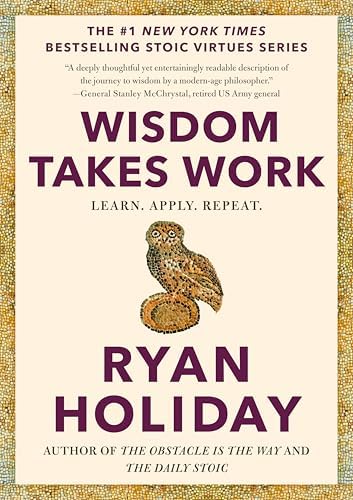
This episode of the Daily Stoic Podcast features host Ryan Holiday, author of Lives of the Stoics, Stillness Is the Key, and Wisdom Takes Work Learn, Apply, Repeat, reflecting solo on two interconnected Stoic themes: the balance between firmness and flexibility, and the trap of deferring contentment to some future achievement.
Holiday opens by contrasting Cato's rigid, uncompromising principles with Marcus Aurelius's pragmatic flexibility, drawing on Lives of the Stoics to show how even virtuous inflexibility can become a liability. He then pivots to a meditation on Meditations 12:1, exploring why humans take unnecessarily complicated paths toward happiness, freedom, and respect that are already within reach. The episode closes with Holiday's personal reflections on enoughness, the Heller-Vonnegut anecdote from Stillness Is the Key, and a promotion of his new book Wisdom Takes Work Learn, Apply, Repeat.
Cato vs. Marcus: Firmness Without Flexibility Fails
As Holiday details in Lives of the Stoics, Cato was a man of deep principle and courage, but his unwillingness to compromise or collaborate ultimately contributed to his failure to preserve the Roman Republic.
Cato was 'lowercase conservative' — he tried always to keep things as they were, making it hard to accept anything new or different.
His rigidity made him 'incredibly difficult to deal with,' despite his genuine virtue.
Marcus Aurelius, by contrast, learned from his teacher Apollonius that 'a man can both show strength and flexibility' — he was unyielding with himself but tolerant and pragmatic with others.
Wisdom Takes Work Learn, Apply, Repeat frames this balance as the core of wisdom: 'knowing when to stand firm and when to be flexible' — a skill Marcus, Lincoln, and even Cato in his own way all had to practice.
The Long Way Around: Why We Defer What We Already Have
Meditations 12:1 opens the reflection: Marcus Aurelius observes that people could enjoy the very things they are striving for right now, if they simply stopped depriving themselves of them.
Holiday describes the pattern: people chase wealth, fame, or status believing it will deliver freedom, happiness, or respect — but those things are already available through choices made in the present moment.
'It's as if we'd prefer to spend years building a complicated Rube Goldberg machine instead of just reaching out and picking up what we want.'
A parable traced back to the 14th century illustrates the trap: a king is advised to conquer territory after territory so he can eventually live in peace — yet he already lives in peace.
The more familiar modern version involves a fisherman in Thailand who is told to scale his operation to eventually retire on a beach — which is exactly where he already lives.
Holiday's personal version: he has caught himself envying the lives of wealthy, famous people — only to discover they invited him over because they want to learn how to write books, envying his life in return.
The Gift of Enough: Contentment as a Present Choice
In Stillness Is the Key, Holiday recounts the famous story of Joseph Heller and Kurt Vonnegut at a wealthy person's party: when Vonnegut points out their host made more money than Heller's books ever would, Heller replies, 'I have something he doesn't have — I have enough.'
Holiday connects this directly to Marcus Aurelius's point: contentment is not a reward waiting at the end of achievement — it is already available, 'already there in the things that you control.'
'I'm trying to do it from a place of enoughness and fullness, not a place of emptiness' — Holiday describes still pursuing interesting work, but from a foundation of sufficiency rather than compulsion to prove himself.
The practical test Holiday applies: 'If just the time that I spent working on it today was all I got, that was enough. That itself was enjoyable.' Process, not outcome, is the source of meaning.



These notes may contain occasional inaccuracies. Learn how podbrain notes are made
More in Philosophy

Spielberg Just Revealed The Truth About Aliens (He Knows!)
Jun 25, 2026Which Of These Are You? | What's In Your Way Is The Way
Jun 25, 2026
The Mindset of a World Cup Champion | Carli Lloyd
Jun 24, 2026It Goes In Only One Direction
Jun 24, 2026
Peter McGrath
Jun 24, 2026.svg)