
The Steven Spielberg Conversation
Sean Fentesy hosts this episode of The Big Picture featuring his conversation with legendary filmmaker Steven Spielberg at South by Southwest Film Festival. This marked Spielberg's first major interview ahead of his new film Disclosure Day, opening June 12th.

Episode


- 01
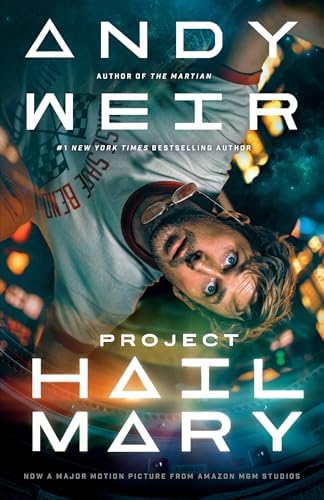
Project Hail Mary opened with $80.6 million domestically, the biggest non-franchise opening since Oppenheimer at $82.5 million in 2023
- 02
Ryan Gosling has entered rare territory as a generational star who can open rom-coms, musicals, dramas, action comedies, and science fiction films
- 03
Spielberg reveals he's developing a Western that 'kicks ass' and will have 'no tropes, no stereotypes' - Sean
- 04
The 2017 New York Times article about Navy pilots recording UFOs completely rekindled Spielberg's interest in making another UFO movie after 50 years
- 05
Daniel Day-Lewis's Lincoln performance was so powerful that Spielberg had to leave the set crying after the first take - Steven
- 06
E.T. was Spielberg's most joyful filmmaking experience because 'I discovered my love for parenting, not just directing' - Steven
- 07
Spielberg watches Lawrence of Arabia on 70mm annually before starting new films because 'it keeps me humble' - Steven
Get the latest ideas from The Big Picture.
Plus the best new takeaways from other top podcasts — read in minutes, not hours.
By continuing, you agree to podbrain's Terms and Privacy Policy.
These notes may contain occasional inaccuracies. Learn how podbrain notes are made
Sean Fentesy hosts this episode of The Big Picture featuring his conversation with legendary filmmaker Steven Spielberg at South by Southwest Film Festival. This marked Spielberg's first major interview ahead of his new film Disclosure Day, opening June 12th.
The discussion covers Spielberg's six-decade career, his fascination with science fiction, thoughts on alien life, the future of moviegoing, and his missing Western from his filmography. Fentesy also provides box office analysis of Project Hail Mary, which opened with $80.6 million domestically, comparing it to other Andy Weir adaptations like The Martian.
The conversation explores Spielberg's creative process, from his childhood fears that sparked his imagination to his intuitive approach to filmmaking, while touching on upcoming projects including Amazon MGM's slate featuring the Verity adaptation and Spielberg's references to ancient astronaut theories from Chariots of the Gods?
Project Hail Mary Breaks Box Office Records for Original Films
Project Hail Mary earned $80.6 million domestically and $140.9 million worldwide, marking the biggest non-franchise opening since Oppenheimer's $82.5 million in 2023.
The film outperformed inflation-adjusted numbers for Gravity, Interstellar, and The Martian (also from Andy Weir), opening like a mid-tier MCU movie with an A CinemaScore and 77 Metacritic score.
Premium large formats and IMAX generated over 55% of the film's total U.S. revenue, demonstrating audiences' desire for event moviegoing experiences.
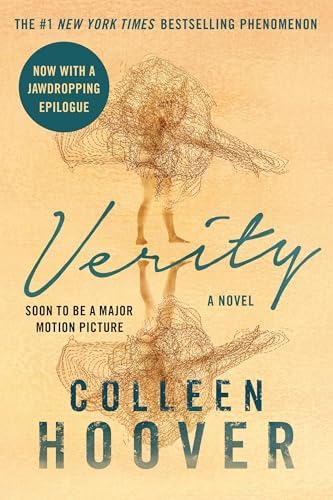
Amazon MGM's upcoming slate includes Verity, the Colleen Hoover adaptation, as part of their strategy to become a full-service theatrical studio releasing 10-12 movies annually.
Spielberg's Childhood Fears Sparked His Imagination
Spielberg's abundance of childhood fears came from an 'overdose, overabundance of imagination' that made him extrapolate and make things much worse than they actually were - Steven.
Seeing Fantasia at age seven, particularly the Night on Bald Mountain sequence, 'destroyed me for the next year. I couldn't sleep. It was scariest thing I'd ever seen' - Steven.
His impulse when scared was to 'create some kind of talisman to protect myself. So I would do things to my sisters to scare them' - Steven.
Parental denial of his urge to 'live in a movie theater and not go to school' made him 'famished for a big experience,' leading to his filmmaking passion - Steven.
UFOs and the Real-World Inspiration for Disclosure Day
The 2017 New York Times article by Helene Cooper about Navy pilots recording UFOs on FLIR 'completely rekindled my interest in this subject matter' after 50 years - Steven.
Spielberg consulted with J. Allen Hynek, former head of Project Blue Book, on Close Encounters after Hynek quit sensing an Air Force cover-up of his investigations.
Despite making Close Encounters and E.T., Spielberg admits: 'I haven't even had a Close Encounter of the First or Second Kind. Where's the justice in that?' - Steven.
Referencing Chariots of the Gods? theories, Spielberg believes we must consider whether 'we have been alone over the last 3,000 years' when discussing alien visitation - Steven.
The Intuitive Filmmaking Process
Spielberg never used storyboards on Schindler's List or Saving Private Ryan, preferring to 'surprise myself' and wake up knowing page count but 'not exactly sure how I'm going to cover it yet' - Steven.
'Our best friend is our intuition. If you listen to it, if you let it carry you through the day, it's a lot better than intellectualizing' - Steven.
He blocks entire shots with second team before actors arrive, then explains his choices: 'I listen to the whispers more than I listen to the loud voice of the brain' - Steven.
The Fablemans was '$40 million of therapy that DreamWorks paid for' where he could 'go into a deep communion with my younger self' - Steven.
Career-Defining Performances That Humbled the Master
Daniel Day-Lewis's Lincoln cabinet scene was so powerful that 'at the end of that first take, I had to leave the set' crying - Steven.
Day-Lewis, still in character as Lincoln, found Spielberg and 'put his arms around me. That was a moment I will never forget' - Steven.
Other humbling performances included Anthony Hopkins in Amistad and Tom Hanks crying in the crater scene, demonstrating how 'an actor, is always a performance' humbles him - Steven.
E.T. was his 'most joyful time' because 'I discovered my love for parenting, not just directing' and made him realize 'how great it's going to be someday to be a parent' - Steven.
The Future of Theatrical Moviegoing
Movie theaters create 'a collective impulse from a good story that hits all of us at the same time' where strangers become 'united with a whole bunch of feelings' - Steven.
The iPhone created 'tremendous portable convenience' that focuses people on smaller devices, requiring 'a bigger idea, a bigger concept' to get audiences to theaters - Steven.
Spielberg watches every Academy Award nominated film and short, maintaining his connection to contemporary cinema while hanging out with 'a real sort of movie club of aficionados' - Steven.
He annually watches Lawrence of Arabia on 70mm before starting new films because 'it keeps me humble. It reminds me, you will never be as good as David Lean' - Steven.


These notes may contain occasional inaccuracies. Learn how podbrain notes are made
.svg)