
The Robert Duvall Hall of Fame
Sean Fantasy and playwright-actor Tracy Letts undertake an exhaustive Hall of Fame celebration for Robert Duvall, the actor Vincent Canby dubbed the 'American Olivier.' Born in 1931, Duvall passed away in 2024 at age 93 after a career spanning over 60 years and 90+ feature films.


- 01
Robert Duvall made over 90 feature films across six decades, working consistently from the 1960s through his 90s
- 02
Between Godfather and Godfather Part 2 (1972-1974), Duvall made seven movies while Al Pacino made only two
- 03
Duvall won his only Academy Award for Best Actor in 1983's Tender Mercies, insisting on singing all songs himself
- 04
His transformational range allowed him to play everything from rural farmers to corporate executives to historical figures like Stalin and Eichmann
- 05
Duvall's collaboration with playwright Horton Foote produced five films that he considered career-defining work
- 06
The actor was known for his 'quiet and explosive' duality - equally powerful whether silent or volcanic in performance
- 07
Duvall directed five films himself, including passion project The Apostle which he financed personally after years of development
Get the latest ideas from The Big Picture.
Plus the best new takeaways from other top podcasts — read in minutes, not hours.
By continuing, you agree to Podbrain's Terms and Privacy Policy.
These notes may contain occasional inaccuracies. Learn how Podbrain notes are made
Sean Fantasy and playwright-actor Tracy Letts undertake an exhaustive Hall of Fame celebration for Robert Duvall, the actor Vincent Canby dubbed the 'American Olivier.' Born in 1931, Duvall passed away in 2024 at age 93 after a career spanning over 60 years and 90+ feature films.
The conversation explores Duvall's unique position as both character actor and movie star, capable of transformational performances across an extraordinary range. From his breakthrough as the silent Boo Radley in To Kill a Mockingbird to iconic roles in The Godfather saga, Apocalypse Now, and Network, Duvall exemplified what great screen acting could achieve.
Letts and Fantasy examine Duvall's prolific output, including his collaborations with directors like Francis Ford Coppola, Robert Altman, and playwright Horton Foote. They discuss his evolution from 1950s television work through his final performances, highlighting both legendary films and overlooked gems while debating which performances deserve canonization in his Hall of Fame.
The Transformational Actor: Range and Method
Duvall's greatness lay in his transformational ability - 'you got a tremendous flexibility and a very facile transformational quality that he could play low status, high status, verbal, nonverbal, smart, dumb, rural and urban' - Tracy
Unlike movie stars who bring versions of themselves, Duvall could 'uncork something way out of what you would think is his comfort zone,' making acting fun through becoming different people
His method training included work with Meisner, though he didn't intellectualize the approach: 'I tried it. It didn't work for me. I actually tried' Brando's cue card technique - Duvall
Brando wrote to Duvall that 'you are the greatest American actor,' which Duvall considered the most impactful compliment of his career
Television Apprenticeship and Early Breakthroughs
From 1960-1969, Duvall appeared in over 30 television episodes across shows like The Twilight Zone, Route 66, The Fugitive, and The Outer Limits, learning to work efficiently under tight schedules
His breakthrough came in 1962's To Kill a Mockingbird as Boo Radley, a critical character with no dialogue who had to 'convey a lot in a short amount of time with no lines'
The casting came through Horton Foote's recommendation, beginning a crucial creative partnership that would span five films over Duvall's career
After True Grit in 1969, Duvall stopped taking television work entirely, making a conscious career decision to focus on feature films
The Coppola Connection and 1970s Masterworks
Duvall met Francis Ford Coppola when Rip Torn quit The Rain People over a stolen motorcycle, leading to their historic collaboration across six films
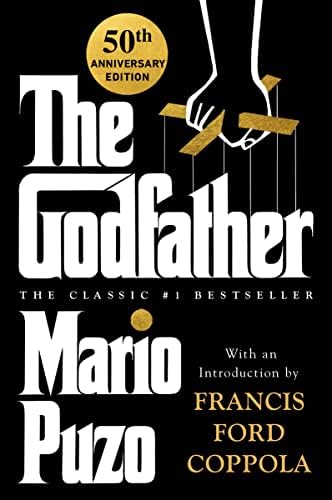
As Tom Hagen in The Godfather films, Duvall served as 'the metronome of the movie,' providing emotional restraint against explosive co-stars like Brando and Pacino
His Lieutenant Colonel Kilgore in Apocalypse Now showcased 'delusional rock and roll energy' with the iconic line 'Someday this war is going to end' before walking off screen
In Network, his Frank Hackett performance featured 'glee and rage and energy and bewilderment' in the 'Ruddy Doesn't Count Anymore' scene - 'he fucking eats that scene up' - Sean
Horton Foote Collaborations and Literary Adaptations
Duvall's partnership with playwright Horton Foote produced five films, with Duvall stating 'if his career was only comprised of his collaborations with Horton Foote, he would have considered it a successful career'
Tomorrow (1972), based on a William Faulkner story, featured Duvall as a poor migrant farmer in a 'big swing in terms of the accent work' that influenced Billy Bob Thornton's Slingblade character
The film adaptations stayed faithful to source material, as seen in True Grit where 'the screenplay by Marguerite Roberts hews very closely to the Charles Portis book'
To Kill a Mockingbird represented 'a beautiful sort of pitch-perfect rendition of the great American novel' with Duvall's haunting, wordless Boo Radley
Award Recognition and Career-Defining Performances
Duvall received seven Academy Award nominations spanning the 1970s, 80s, 90s, and 2000s, winning Best Actor for Tender Mercies in 1983
Tender Mercies showcased 'one of the quietest and most sensitive films and performances that Duval ever gave' as aging country singer Mac Sledge
The Great Santini (1979) resonated with audiences who had domineering fathers: 'Anyone who's ever had a father relates to this movie' - Tracy
Lonesome Dove miniseries featured 'one of the great scenes in the history of television' in Duvall's final scene as Gus McCrae
Directorial Vision and Passion Projects
Duvall directed five films, starting with documentary We're Not the Jet Set about rodeo families, though it remains unavailable due to divorce proceedings
The Apostle (1997) was his longtime passion project, written first in 1983 and self-financed after years of development, earning him an Oscar nomination
Angelo My Love (1983) emerged from overhearing 'a lover's quarrel' involving an eight-year-old Romani boy, leading to an improvised narrative about the community
Assassination Tango (2002) reflected his marriage to an Argentinian woman and newfound love of tango, though the film suffered from keeping dance and crime stories separate




These notes may contain occasional inaccuracies. Learn how Podbrain notes are made
.svg)