
The Meryl Streep Hall of Fame
Sean Fennesy and Amanda Dobbins construct a Hall of Fame for Meryl Streep, arguably the most important film actor of the past 50 years. With refref-inline-the devil wears prad-mnte267hThe Devil Wears Prada 2 releasing soon, they examine all 65 of her feature films to...


- 01
Meryl Streep has appeared in 65 feature films, earning 21 Oscar nominations and 3 wins across nearly 50 years
- 02
The Devil Wears Prada marked her transformation into a mainstream box office star after decades of prestige dramas
- 03
Her 1980s work represents her creative peak, featuring morally complex characters in films like Sophie's Choice and Silkwood
- 04
Streep's greatest skill is making dialogue feel spontaneous rather than scripted, never appearing to 'act' on screen
- 05
She has portrayed at least 10 real people, from Julia Child to Margaret Thatcher, with extensive research for each role
- 06
Kramer vs. Kramer established her as the great maternal figure of American cinema, exploring complex family dynamics
- 07
Her willingness to play unlikable characters, especially in A Cry in the Dark, sets her apart from typical leading ladies
Get the latest ideas from The Big Picture.
Plus the best new takeaways from other top podcasts — read in minutes, not hours.
By continuing, you agree to Podbrain's Terms and Privacy Policy.
These notes may contain occasional inaccuracies. Learn how Podbrain notes are made
Sean Fennesy and Amanda Dobbins construct a Hall of Fame for Meryl Streep, arguably the most important film actor of the past 50 years. With refref-inline-the devil wears prad-mnte267hThe Devil Wears Prada 2 releasing soon, they examine all 65 of her feature films to select the 10 most essential works.
The conversation traces Streep's evolution from serious 1970s character work in films like The Deer Hunter through her 1980s peak with Sophie's Choice and Kramer vs. Kramer, to her later mainstream success with Mamma Mia and The Devil Wears Prada. They explore her unmatched ability to disappear into roles while maintaining an essential screen presence.
The hosts also discuss the recent Cannes Film Festival lineup, noting the absence of major American studio films and the festival's focus on international auteur cinema. They preview their upcoming trip to CinemaCon in Las Vegas and tease a summer movie preview game.
Cannes 2024: International Cinema Takes Center Stage
The Cannes lineup features very few American films in competition, with no major studio releases, continuing a 10-year trend of studios avoiding the festival after disappointing receptions for films like Megalopolis and Indiana Jones.
Competition highlights include Christian Mungiu's Fjord, Pavel Pawlikowski's Fatherland, and Hirokazu Kore-eda's Sheep in the Box, representing a heavily European and Asian cinema focus.
Steven Soderbergh faces criticism for announcing 'a lot of AI' will appear in his future films, including the new John and Yoko documentary The Last Interview.
Meryl Streep's Career Foundation: 1970s Breakthrough
Streep's film debut in Julia (1977) shows visible inexperience, the only time her acting technique is detectable on screen, establishing her path of accent work and period costume.
The Deer Hunter served as her announcement as a major talent, filmed during the final illness of her partner John Cazale, creating a transference where she inherited his place in important American cinema.
Her supporting role in Manhattan showcases a completely different register as 'the ultimate ball breaker,' proving her range beyond serious dramatic work.
The 1980s: Establishing Greatness Through Moral Complexity
Kramer vs. Kramer earned her first Oscar win and established her as cinema's great maternal figure, with Streep fighting for a more sympathetic courtroom speech that changed the film's meaning.
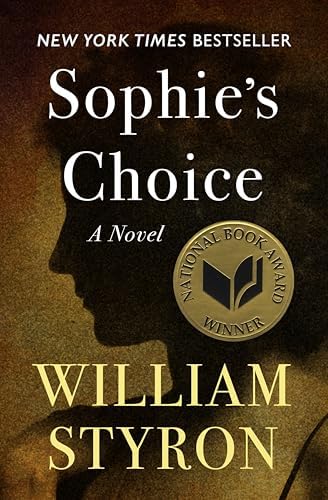
Sophie's Choice brought her second Oscar for William Styron's adaptation, featuring Polish and German language work, though the hosts question whether the source material would be received the same way today.
Silkwood and A Cry in the Dark demonstrate her willingness to play unlikable characters, with the latter based on the true story of Lindy Chamberlain, whose infant was killed by a dingo in Australia.
Literary Adaptations: Transforming Complex Source Material
The French Lieutenant's Woman adapts John Fowles' postmodern novel with its multiple endings, featuring Streep in dual roles as both actress and character in a meta-narrative structure.
The House of the Spirits represents a miscast adaptation of Isabel Allende's expansive Chilean family saga, featuring no South American actors despite the setting.
Heartburn, adapted from Nora Ephron's semi-autobiographical novel about her relationship with Carl Bernstein, serves as the blueprint for later Nancy Meyers-style romantic comedies.
Career Reinvention: From Prestige to Mainstream Success
The Devil Wears Prada marked her transformation into a box office star, with Miranda Priestley becoming a character that exists beyond just 'Merylness,' communicating power through whispers rather than volume.
Mamma Mia proved her commercial appeal, culminating in her singing 'The Winner Takes It All' to Pierce Brosnan below a hilltop church in one of cinema's most memorable musical moments.
Adaptation showcases her willingness to take creative risks, playing journalist Susan Orlean in Charlie Kaufman's meta-narrative based loosely on The Orchid Thief.
The Essential Meryl Streep Hall of Fame Selection
The final Hall of Fame includes 10 films: Kramer vs. Kramer, Sophie's Choice, Silkwood, A Cry in the Dark, Postcards from the Edge, The Bridges of Madison County, Adaptation, The Devil Wears Prada, Mamma Mia, and Julie & refref-inline-julia-mnte2675Julia.
The selection spans five decades, representing her evolution from serious 1980s character work to later mainstream success, with notable blues going to Heartburn and Ricky and the Flash.
Potential future addition: Cameron Crowe's upcoming Joni Mitchell biopic where Streep may play the older version alongside Anya Taylor-Joy as the younger Mitchell.










These notes may contain occasional inaccuracies. Learn how Podbrain notes are made
.svg)