
The 1988 Movie Draft
Sean Fennessey, Amanda Dobbins, Chris Ryan, and guest Bill Simmons draft movies from 1988 in the new Ringer studio. Bill reflects on his freshman year of college when many of his favorite films were released, while the hosts discuss their varying ages and perspectives on this pivotal movie year.


- 01
1988 had no movie that cracked $200 million domestically, unlike 1989's $350 million hit, showing a more distributed box office
- 02
Tom Cruise had his MVP year with two blockbusters: Rain Man ($172M) and Cocktail ($78M), establishing him as a major star
- 03
The year featured heavyweight filmmakers like Scorsese, Coppola, Tim Burton, and Ron Howard all releasing movies simultaneously
- 04
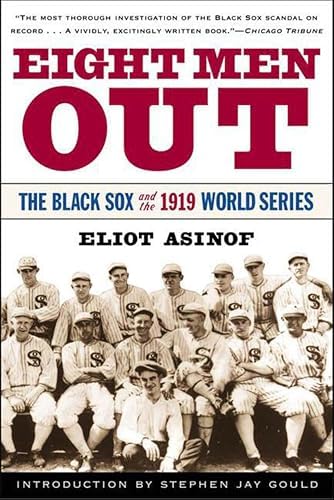
Eight Men Out was adapted from one of the great sports books ever written, considered among the 10 best when the film was made
- 05
The 1988 Oscars with Rob Lowe and Snow White was described in Oscar Wars as one of the worst ceremonies ever
- 06
Michael Keaton had a breakthrough year with Beetlejuice leading directly to his Batman casting the following year
- 07
Die Hard essentially created a new action movie template that filmmakers have been trying to replicate unsuccessfully for decades
Get the latest ideas from The Big Picture.
Plus the best new takeaways from other top podcasts — read in minutes, not hours.
By continuing, you agree to Podbrain's Terms and Privacy Policy.
These notes may contain occasional inaccuracies. Learn how Podbrain notes are made
Sean Fennessey, Amanda Dobbins, Chris Ryan, and guest Bill Simmons draft movies from 1988 in the new Ringer studio. Bill reflects on his freshman year of college when many of his favorite films were released, while the hosts discuss their varying ages and perspectives on this pivotal movie year.
The conversation explores 1988 as a transitional moment in Hollywood, featuring established directors making solid films rather than masterpieces, and the emergence of new stars like Tom Cruise and Michael Keaton. The year notably lacked a single massive blockbuster, instead offering a diverse slate of original content before the sequel-heavy 1989.
The draft covers seven categories: drama, comedy, action/horror/thriller, Oscar nominee, sequel, blockbuster ($75M threshold), and wildcard. With only nine films qualifying for blockbuster status, strategic category management becomes crucial as the hosts balance personal passion picks with competitive drafting.
The Box Office Landscape of 1988
Unlike 1989's $350 million hit, no 1988 movie cracked $200 million domestically, with Rain Man leading at $172 million and a more distributed earnings pattern across multiple films.
The year featured steady mid-range performers earning $10-16 million monthly rather than one dominant blockbuster, reflecting a different theatrical model where audiences attended movies multiple times per week.
Only nine films qualified for the $75 million blockbuster threshold, compared to 17 films in 1989, making strategic category selection crucial for the draft.
Tom Cruise's MVP Season and Star Power
Tom Cruise dominated 1988 with Rain Man and Cocktail, establishing himself as the decade's biggest star through two completely different but successful performances.
"This is like his MVP season. Cocktail has no business being the ninth biggest movie. That's insane" - Bill, noting Cruise's ability to carry a weak concept to $78 million.
Rain Man represented Cruise's transition from cocky Top Gun persona to the Charlie Babbitt character he would play variations of for the next eight years.
The year also featured breakthrough performances from Michael Keaton in Beetlejuice, which directly led to his Batman casting, and Tom Hanks carrying Big entirely on his shoulders.
Literary Adaptations and Cultural References
Eight Men Out was adapted from Eliot Asinof's book about the Black Sox scandal, described as "one of the great sports books ever" and "considered like one of the 10 best" when the film was made.
The controversial 1988 Oscar ceremony featuring Rob Lowe and Snow White is detailed in Michael Schulman's Oscar Wars, which explains how the Academy's attempt to modernize backfired spectacularly.
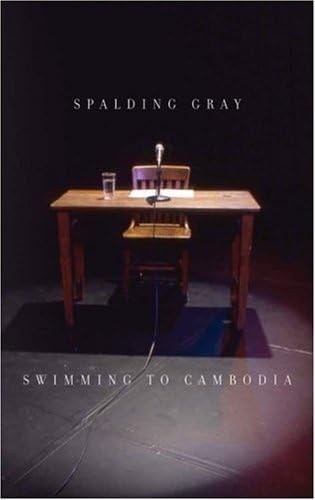
Swimming to Cambodia, Spalding Gray's monologue about his experience making The Killing Fields, was adapted by Jonathan Demme around this period, showcasing the era's interest in experimental storytelling.
Genre Innovation and Technical Achievement
Who Framed Roger Rabbit represented an "insane technical achievement" that blended animation and live-action in unprecedented ways, earning six Oscar nominations.
Die Hard "essentially created a new action movie template" that filmmakers have unsuccessfully tried to replicate, with Midnight Run being "probably the movie people have tried to make and failed the most."
Tim Burton's Beetlejuice showcased a distinct directorial vision that made viewers realize "only one person could have made this," representing early auteur recognition in mainstream cinema.
The Draft Results and Strategic Choices
Chris Ryan selected Die Hard (blockbuster), Bull Durham (comedy), They Live (action), Married to the Mob (Oscar nominee), Caddyshack 2 (sequel), Last Temptation of Christ (drama), and Naked Gun (wildcard).
Bill Simmons chose Rain Man (Oscar nominee), Big (blockbuster), Cocktail (blockbuster), Midnight Run (comedy), Halloween 4 (sequel), Dangerous Liaisons (drama), and Action Jackson (wildcard).
Sean Fennessey picked Who Framed Roger Rabbit (Oscar nominee), Beetlejuice (comedy), Eight Men Out (drama), Young Guns (action), The Decline of Western Civilization Part 2 (sequel), Big (blockbuster), and A Fish Called Wanda (wildcard).
Amanda Dobbins selected Working Girl (comedy), Coming to America (blockbuster), Women on the Verge of a Nervous Breakdown (Oscar nominee), Running on Empty (drama), Frantic (action), Appointment with Death (sequel), and Crossing Delancey (wildcard).

These notes may contain occasional inaccuracies. Learn how Podbrain notes are made
.svg)