
Google’s Big AI Test Comes Next Week
This episode covers major developments in AI markets, enterprise adoption, and the emerging divide between consumer and work AI applications. The discussion features analysis of Cerebrus's successful IPO debut, OpenAI's Codex mobile launch, and Google's upcoming I/O event strategy.


- 01
Cerebrus delivered a massive IPO debut with 68% first-day gains, reaching a $66 billion market cap and signaling potential AI IPO boom
- 02
OpenAI's Codex now serves 4 million users weekly, representing high-value enterprise customers building with agents rather than individual consumers
- 03
Figma credited AI features with accelerating revenue growth to 46%, demonstrating SaaS recovery through AI integration and usage-based pricing
- 04
OpenAI launched Codex mobile app enabling full coding workflows from phones, marking shift from 'AI helps me code' to 'AI works alongside me continuously'
- 05
Google's rumored Gemini 3.2 Flash could hit 92% of GPT-5.5 performance while being 15-20x cheaper on inference costs
- 06
Work AI and consumer AI are diverging into distinct categories, with enterprise users demanding faster updates while consumers show resistance to AI features
- 07
Anthropic reportedly raising $30 billion at $900 billion valuation, nearly tripling from February's $380 billion Series G round
- 08
Claude Mythos demonstrated significant cybersecurity capabilities, helping Mozilla find 423 bugs in one month versus 15 months previously
Get the latest ideas from The AI Daily Brief: Artificial Intelligence News and Analysis.
Plus the best new takeaways about artificial intelligence from other top podcasts — read in minutes, not hours.
By continuing, you agree to Podbrain's Terms and Privacy Policy.
These notes may contain occasional inaccuracies. Learn how Podbrain notes are made
This episode covers major developments in AI markets, enterprise adoption, and the emerging divide between consumer and work AI applications. The discussion features analysis of Cerebrus's successful IPO debut, OpenAI's Codex mobile launch, and Google's upcoming I/O event strategy.
Key themes include the shift from individual AI usage to managing fleets of AI agents, the end of the AI subsidy era with usage-based pricing models, and competitive positioning among major AI labs. The episode also explores how companies like Figma are driving revenue growth through AI features and examines the growing divergence between consumer AI adoption patterns and enterprise demand.
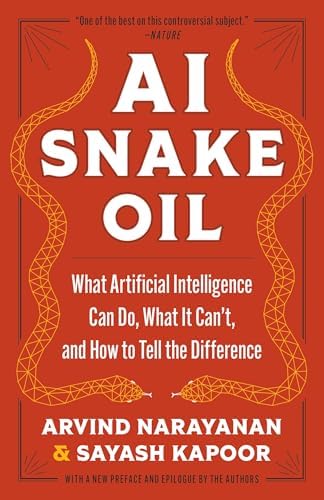
The analysis draws on insights from AI as Normal Technology by Arvind Narayanan and Sayesh Kapoor, which argued that AI adoption would follow normal technology diffusion patterns rather than the accelerated disruption many predicted, providing context for current market dynamics.
Cerebrus IPO Signals AI Market Frenzy
Cerebrus went public with explosive results, opening at double the IPO price before settling at 68% gains, reaching a $66 billion market cap from $40 billion opening
CNBC's Jim Kramer warned investors to 'tread carefully,' stating 'I just can't even come close to justifying the valuation up here, given how much it's already run right out of the gate'
The IPO sets up dynamics for upcoming mega-IPOs including SpaceX finalizing paperwork next week, with Anthropic and OpenAI rumored for year-end launches
Market showed 45 buyers for every seller, with Packy McCormick joking 'If inference demand is infinite, Cerebris at $400 is ridiculously cheap'
Enterprise AI Revenue Acceleration
Figma reported 46% revenue growth acceleration from 40% previous quarter, with CFO crediting AI features: 'You can't dismiss the significance of new tools'
Figma introduced usage caps and token charging in March, with 75% of customers either staying within limits or paying for additional use without retention impact
NVIDIA surged 20% over seven days, pushing the world's largest company close to $6 trillion valuation as markets embrace AI hype train
Codex Mobile Transforms Development Workflows
OpenAI launched Codex in ChatGPT mobile app, enabling full development workflows including initiating work, reviewing outputs, and approving next steps from phones
Nick Bauman from OpenAI described workflow shift: 'My laptop has become a satellite device since I started using codecs for my phone, and my Mac Mini has become the home'
The mobile interface represents admission that 'we're entering a world where your job is triage, not execution' with human review cycles becoming the bottleneck - Lapo
Zord characterized this as 'AI agents becoming persistent operators, not just chat interfaces' where AI works alongside continuously rather than just helping
Consumer vs Work AI Divergence
Work AI users demand faster updates and unlimited access while consumers show resistance to AI features being 'shoved down their throats' in unwanted places
The analysis references AI as Normal Technology by Narayanan and Kapoor, which predicted AI would follow normal technology diffusion patterns rather than accelerated disruption
For work applications, AI represents 'an extremely abnormal technology' creating category shifts in how knowledge work moves from doing tasks to managing AI agents
OpenAI made clear decision to prioritize work users over consumers, best expressed in their Sora shutdown to focus resources on enterprise applications
Google I/O Strategy and Competitive Positioning
Google plans to announce Gemini Spark, an always-on personal AI agent promising to 'do more as your everyday AI agent, ready 24/7 to help with your inbox, online tasks, and more'
Rumored Gemini 3.2 Flash could deliver '92% of GPT-5.5's performance on coding and reasoning tasks while being 15 to 20x cheaper on inference costs'
Google faces product sprawl challenges with unclear main agentic coding platform among Gemini CLI, AI Studio, and Jules options
Unlike OpenAI's lane-picking strategy, Google continues pursuing both consumer and work AI applications simultaneously across multiple product categories
AI Security Capabilities and Market Dynamics
Claude Mythos helped Mozilla find and patch 423 bugs in one month, more than the previous 15 months combined, demonstrating significant capability jumps
Security researchers used Mythos to exploit Apple's macOS by linking bugs for kernel memory access, with researchers noting it 'generalizes to nearly any problem in that class'
Anthropic reportedly raising $30 billion at $900 billion valuation with Sequoia and Altimeter co-leading, nearly tripling from February's $380 billion round
Microsoft began canceling Claude Code licenses for developers, shifting to GitHub Copilot CLI as financial year ends, citing both competitive and cost factors

These notes may contain occasional inaccuracies. Learn how Podbrain notes are made
More in Science & Tech

How the Escalating AI Wars Benefit You
Jul 13, 2026
Before Blockchains, There Was State Machine Replication
Jul 13, 2026How to Help People Thrive with AI
Jul 12, 2026ChatGPT Just Became a Work Agent
Jul 10, 2026
Why CLOs Are Suddenly DeFi's Hottest Yield Play
Jul 10, 2026
.svg)