
Cosmic Queries – Scars in Spacetime
Neil deGrasse Tyson hosts this Star Talk Cosmic Queries grab bag episode with Emmy and Peabody Award-winning comedy writer Paul Mercurio, who works on The Late Show with Stephen Colbert and collects questions from Patreon members.


- 01
Black holes have escape velocities equal to light speed, making them inescapable - 'you fall in, you ain't never coming out' - Neil
- 02
Wormholes require 'negative gravity stuff' to pry open space-time, which doesn't exist naturally in our universe
- 03
The Roche limit only affects objects held together by gravity, not solid objects bound by electromagnetic forces
- 04
Sound cannot propagate in space due to lack of air, making explosions completely silent contrary to sci-fi movies
- 05
Dark energy creates negative pressure that accelerates universal expansion faster than light speed, making it impossible to 'outrun the universe'
- 06
Water pressure at depth can collapse air-filled objects like gloves, creating the sensation of being squeezed underwater
- 07
Multiple time travelers would create timeline chaos, potentially splitting into separate universes to avoid contradictions
Get the latest ideas from StarTalk Radio.
Plus the best new takeaways about space from other top podcasts — read in minutes, not hours.
By continuing, you agree to Podbrain's Terms and Privacy Policy.
These notes may contain occasional inaccuracies. Learn how Podbrain notes are made
Neil deGrasse Tyson hosts this Star Talk Cosmic Queries grab bag episode with Emmy and Peabody Award-winning comedy writer Paul Mercurio, who works on The Late Show with Stephen Colbert and collects questions from Patreon members.
The conversation covers fundamental physics concepts from black holes and wormholes to the Roche limit and universal expansion, while addressing common science fiction tropes and misconceptions.
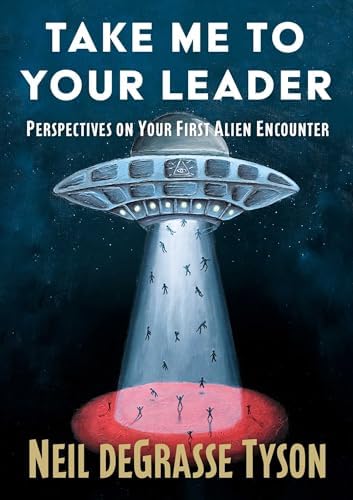
Tyson promotes his latest work Take Me to Your Leader, exploring alien encounters and first contact scenarios, while discussing the practical challenges of space travel and cosmic phenomena.
Black Holes vs Wormholes: The Ultimate Cosmic Comparison
Black holes are regions where gravity creates escape velocities equal to light speed - 'Light's not coming out. You fall in, you ain't never coming out' - Neil
Wormholes theoretically connect black holes to white holes (their mathematical opposite) but require 'negative gravity stuff' that doesn't exist naturally
Earth's escape velocity is seven miles per second, demonstrating why 'what goes up must come down' only applies to everyday throwing speeds
The Roche Limit: When Gravity Loses the Tug of War
The Roche limit only affects objects held together by gravity, not solid objects bound by electromagnetic forces which are 40 orders of magnitude stronger
Tidal forces increase as the inverse cube of distance - at one-third the distance, forces become 27 times stronger
Objects crossing the Roche limit don't break apart but 'disassemble' as gravity can no longer hold their components together
Saturn's rings likely formed from a moon that crossed Saturn's Roche limit and disassembled into countless particles
Water Pressure Physics and Underwater Sensations
Rubber gloves feel squeezed underwater because water pressure compresses trapped air between skin and glove material
At greater depths, water pressure can pop eardrums, collapse lungs, and eventually cause human implosion
Demonstration: submerging an open plastic bag underwater will vacuum-seal it around contents as air gets compressed out
Universal Expansion: Why We Can't Outrun the Cosmos
Space expands faster than light due to dark energy creating negative pressure that accelerates expansion
The original expansion energy exceeded the universe's escape velocity, ensuring eternal expansion
'You're not outrunning the universe' - Neil, because distant regions recede faster than light speed
Overused Sci-Fi Tropes That Drive Scientists Crazy
Space explosions should be completely silent since sound requires air to propagate, but movies add dramatic sound effects
Laser beams are invisible unless particles reflect light sideways - 'you won't see the beam because it's light' - Neil
Aliens speaking perfect English immediately upon arrival, despite humans struggling to understand regional accents
The cliché of astronauts touching video screens showing newborn babies from their spouse back on Earth
Human Connection Through Imperfection and Curiosity
Mercurio's audience interaction philosophy: 'People want to be heard in a context where they feel safe' emotionally and intellectually
'We all have beautiful imperfection' - Paul, suggesting that embracing flaws creates authentic human connections
Tyson measures intelligence by 'depth of curiosity' rather than accumulated knowledge, creating intellectual safety for learning
Both hosts create environments where people don't fear displaying ignorance, enabling genuine discovery and connection
These notes may contain occasional inaccuracies. Learn how Podbrain notes are made
More in Science & Tech

How the Escalating AI Wars Benefit You
Jul 13, 2026
Before Blockchains, There Was State Machine Replication
Jul 13, 2026How to Help People Thrive with AI
Jul 12, 2026ChatGPT Just Became a Work Agent
Jul 10, 2026
Why CLOs Are Suddenly DeFi's Hottest Yield Play
Jul 10, 2026
.svg)