
The Surprising Similarity Between the US and Chinese Internets
Joe Wiesenthal and Tracy Alloway host Yiling Lui, author of The Wall Dancers Searching for Freedom and Connection on the Chinese Internet. Lui examines the Chinese internet through individual stories rather than state or platform perspectives, challenging...


- 01
Yiling Lui's The Wall Dancers explores how Chinese internet users 'dance in shackles' - navigating innovation within rigid state constraints behind the Great Firewall
- 02
Weibo's competitive advantage was superior censorship - it survived 2009 Urumqi protests by scrubbing content better than competitors who got shut down
- 03
Chinese censorship thrives on vagueness with no clear red lines, forcing platforms to self-censor preemptively to avoid regulatory punishment
- 04
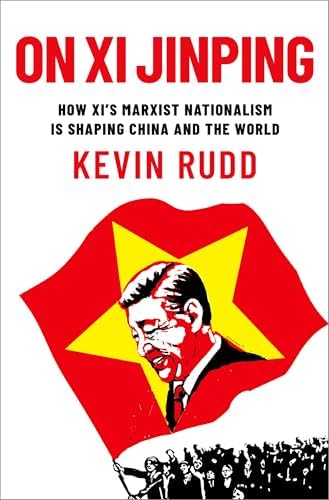
Kevin Rudd's analysis in On China shows nationalist internet trends began under Hu Jintao, not Xi Jinping, suggesting bottom-up forces preceded top-down control
- 05
American and Chinese internets evolved similarly despite different governance - both became centralized, tribal, and dominated by nationalist mob behavior
- 06
Chinese platforms employ armies of censors - Weibo grew from 150 employees in 2011 to approximately 10,000 by 2020 for content moderation
- 07
The 2008 Beijing Olympics and financial crisis created a nationalist turning point when Chinese users saw Western criticism while America's economy collapsed
- 08
Red Note flooding by American TikTok users created rare sincere cross-cultural exchange, with Chinese users teaching Americans to bypass censorship
Get the latest ideas from Odd Lots.
Plus the best new takeaways from other top podcasts — read in minutes, not hours.
By continuing, you agree to Podbrain's Terms and Privacy Policy.
These notes may contain occasional inaccuracies. Learn how Podbrain notes are made
Joe Wiesenthal and Tracy Alloway host Yiling Lui, author of The Wall Dancers Searching for Freedom and Connection on the Chinese Internet. Lui examines the Chinese internet through individual stories rather than state or platform perspectives, challenging binary narratives of China as either economic juggernaut or techno-authoritarian regime.
The conversation explores how both American and Chinese internets evolved from decentralized, utopian beginnings into centralized, tribal platforms dominated by nationalist sentiment. Lui's book title derives from 'dancing in shackles' - a Chinese term describing creative navigation within state constraints.
Key topics include the mechanics of Chinese censorship, the rise of nationalist 'Little Pinks' online communities, platform survival strategies, and surprising parallels between American and Chinese internet culture. The discussion also covers the recent Red Note phenomenon when American TikTok users flooded the Chinese platform during the brief US ban.
The Vague Art of Chinese Internet Censorship
The Wall Dancers reveals that Chinese censorship deliberately maintains vagueness - 'there are no red lines' which allows the system to function effectively through uncertainty and self-censorship.
Censorship evolved from clear 'three T's' (Tiananmen, Tibet, Taiwan) to encompassing ideological agenda items like 'sissy boys' and excessive wealth flaunting by the mid-2010s.
Weibo survived the 2009 Urumqi protests by excelling at content scrubbing while competitors got shut down - 'He just did a much better job of censoring' - Lui.
Platforms maintain proprietary keyword databases as 'extremely valuable' assets - superior censorship databases determine company survival in the Chinese market.
The Labor-Intensive Censorship Machine
Weibo's censorship workforce exploded from 150 employees in 2011 to approximately 10,000 by 2020, demonstrating the massive human resources required for content moderation.
The system operates through cascading directives from China's Cyberspace Administration (CAC) to platform censors, who often preemptively self-censor to avoid regulatory punishment.
'Flooding' tactics involve patriotic users pumping content to bury unwanted news - similar to coordinated online mob behavior seen globally.
Chinese internet users develop elaborate coded language using homonyms like 'grass mud horse' (sounds like profanity) to bypass keyword filters, requiring constant adaptation.
The 2008 Turning Point That Shaped Modern Chinese Nationalism
On China by Kevin Rudd argues that nationalist turns preceded Xi Jinping, beginning under Hu Jintao when internet forces were already brewing bottom-up sentiment.
The 2008 Beijing Olympics and financial crisis created a pivotal moment - Chinese users saw Western criticism of Tibet protests while America's economy collapsed.
'There was this sense of like, well, you know, we expected to engage with the outside world, and instead the West is criticizing China and can't get its own ship in order' - Lui.
Early 'angry youth' (fenqing) evolved into 'Little Pinks' by 2016 - nationalists using K-pop fan tactics to attack perceived enemies of China.
Surprising Parallels Between American and Chinese Internet Culture
Both internets evolved from decentralized, utopian beginnings into centralized platforms dominated by 'sheer tribalism and conflictualism' despite different governance systems.
'How different is Elon Musk's control over X or Twitter different from the Chinese government's control of Weibo. The whims of one man essentially dictates the way a platform plays out' - Lui.
Terms like 'NPC' (non-player character) appear on both sides, reflecting shared feelings of powerlessness among users who aren't building the technology.
The biggest cleavage in both societies is between technology builders who feel agency and users who feel like 'non-player characters' with no control.
The Red Note Experiment and Cross-Cultural Exchange
Millions of American TikTok users flooded Chinese platform Red Note (Xiaohongshu) during the brief US ban, creating 'the first time there was this really sincere and earnest exchange between users on both sides' - Lui.
The irony was striking - Americans escaping their 'closed and siloed' internet by jumping to the Chinese platform, like 'a reverse Berlin Wall moment.'
Chinese users taught Americans how to bypass Red Note censors, demonstrating cross-cultural solidarity in circumventing platform restrictions.
Red Note is described as 'China's Instagram meets Pinterest meets Yelp' - primarily used by young urban women with a 'slightly more liberal bent.'

These notes may contain occasional inaccuracies. Learn how Podbrain notes are made
More in Finance & Business

YouTube Video
Jan 1, 1970
The $2B AI Startup Simulating Human Behavior with 85% Accuracy
Oct 26, 2026
AI Agents Could Drive 10,000x More Web Activity | Former Twitter CEO
Oct 24, 2026
Jake Paul's Business Partner on Bitcoin, AI & the Next Trillion-Dollar Trade | Geoff Woo
Jul 13, 2026
Talk Your Book: Do We Need the Federal Reserve?
Jul 13, 2026
.svg)