
The Fight Over Fed Independence Just Got Taken To a Whole New Level
Tracy Alloway and Joe Wiesenthal host this emergency episode of Odd Lots, their fourth in just ten days of 2026, discussing the escalating conflict between the Trump administration and Federal Reserve Chairman Jerome Powell.


- 01
Jerome Powell received a DOJ grand jury subpoena threatening criminal indictment over Federal Reserve building renovation testimony
- 02
Powell broke diplomatic silence, calling the subpoena 'extortion' and 'intimidation' over interest rate policy frustrations
- 03
This represents unprecedented escalation beyond typical central bank independence debates into potential prison time territory
- 04
Tom Tillis announced he will block all Fed nominations, while Polymarket odds on Powell leaving dropped from mid-80s to mid-70s
- 05
Legal defense costs fall entirely on officials personally, creating chilling effect on government service recruitment
- 06
Market reaction remained muted despite constitutional crisis, with stocks down and yields up but no panic selling
- 07
Monetary policy and bank regulation are fundamentally interlinked since banks create the actual money supply in circulation
Get the latest ideas from Odd Lots.
Plus the best new takeaways from other top podcasts — read in minutes, not hours.
By continuing, you agree to Podbrain's Terms and Privacy Policy.
These notes may contain occasional inaccuracies. Learn how Podbrain notes are made
Tracy Alloway and Joe Wiesenthal host this emergency episode of Odd Lots, their fourth in just ten days of 2026, discussing the escalating conflict between the Trump administration and Federal Reserve Chairman Jerome Powell.
The immediate catalyst is a DOJ grand jury subpoena served to Powell, threatening criminal indictment over his congressional testimony regarding Federal Reserve building renovations. Powell responded with unprecedented directness, calling it 'extortion' and 'intimidation' over interest rate policy disagreements.
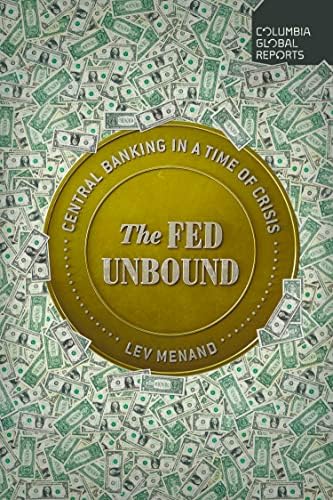
Guest Lev Menand, Columbia Law School professor and author of The Fed Unbound, provides expert analysis on this constitutional crisis that extends far beyond typical central bank independence debates into potential criminal prosecution territory.
Criminal Subpoena Marks Unprecedented Escalation
Jerome Powell received a DOJ grand jury subpoena threatening criminal indictment over alleged lies in congressional testimony about Federal Reserve building renovation from June 2025.
Powell broke his typical diplomatic silence with a video statement calling the subpoena retaliation for interest rate policy, describing it as 'extortion' and 'intimidation' - Lev Menand called it 'the straw that broke the camel's back.'
"This is an attempt by this administration to force out its perceived political opponents from the government" - Lev, comparing it to hypothetical criminal investigations of Chuck Schumer or Supreme Court justices.
Multiple Legal Fronts Target Fed Independence
Supreme Court oral arguments on Lisa Cook's removal are scheduled for days from recording, with potential June decision that could reshape agency independence broadly.
The Cook case involves whether Trump's termination efforts were legally adequate, while courts have kept her in position despite removal attempts.
Tom Tillis announced he will block all Fed nominations, while Polymarket odds on Powell leaving by year-end dropped from mid-80s to mid-70s following the subpoena news.
Financial and Legal Burdens Chill Government Service
Officials must pay their own legal defense costs, with Powell hiring Williams & Connolly on his personal dime - "the law does not permit the agencies to pay for this in any way" - Lev.
Elite law firms are increasingly scared to represent administration opponents due to explicit threats against lawyers who take such cases.
Governor Kugler resigned abruptly six months early amid investigation, while FTC Commissioner Bedoya had to find other work after removal, unable to afford fighting for reinstatement.
Markets Shrug Despite Constitutional Crisis
Market reaction remained muted with stocks down and yields up slightly, but no panic in long bonds where central bank independence concerns would typically manifest.
"It happened gradually and then suddenly" - Lev describing how markets price regime change, noting potential tipping point if Trump appointees gain board control.
Many Fed powers beyond monetary policy could be weaponized without affecting dollar value, including control over the entire payments system infrastructure.
Monetary Policy and Bank Regulation Inseparable
"Monetary policy is bank regulation and vice versa" - Lev, explaining that JP Morgan and Bank of America create the actual money supply through deposit expansion.
The Fed influences money supply by changing incentives on banking system balance sheets, primarily through overnight rates but also capital requirements and supervisory expectations.
As outlined in The Fed Unbound, splitting monetary and regulatory functions would be ineffective since bank regulators fundamentally control money supply expansion regardless of rate-setting authority.
These notes may contain occasional inaccuracies. Learn how Podbrain notes are made
More in Finance & Business

YouTube Video
Jan 1, 1970
The $2B AI Startup Simulating Human Behavior with 85% Accuracy
Oct 26, 2026
AI Agents Could Drive 10,000x More Web Activity | Former Twitter CEO
Oct 24, 2026
Jake Paul's Business Partner on Bitcoin, AI & the Next Trillion-Dollar Trade | Geoff Woo
Jul 13, 2026
Talk Your Book: Do We Need the Federal Reserve?
Jul 13, 2026
.svg)