
Mariana Mazzucato Thinks We Need More Moonshots
This episode features Mariana Mazzucato, professor at University College London, founder of the Institute for Public Purpose, and author of several influential books including The Entrepreneurial State and The Big Con. The conversation takes place...


- 01
Mariana Mazzucato argues that The Entrepreneurial State demonstrates how government investments, not private entrepreneurship, created the technologies that make smartphones smart - Internet, GPS, touchscreen, Siri
- 02
During COVID, the UK paid Deloitte £1.5 million per day for test and trace services that failed, exemplifying how consultants substitute for weakened state capacity
- 03
NASA's Apollo program worked with 400,000 private sector people using outcome-based procurement, not cost-plus contracts, to solve specific problems like astronaut bathroom facilities
- 04
AI companies are hemorrhaging talent from publicly-funded institutions like universities and DARPA by paying salaries that government cannot match, concentrating knowledge in private hands
- 05
The Big Con reveals that consultants often work 'both sides of the street' - advising both regulators and the companies being regulated, creating massive conflicts of interest
- 06
Government Digital Services in the UK became 'the coolest place to work' for software engineers by focusing on users with human rights rather than treating citizens as customers
- 07
Sweden's mission of achieving a 'fossil-free welfare state' led to concrete policies like healthy, sustainable school meals requiring cross-ministerial coordination
- 08
The Age of Surveillance Capitalism insight that 'you think you're searching Google for free, they're searching you for free' could have been avoided through better algorithm design from the start
Get the latest ideas from Odd Lots.
Plus the best new takeaways from other top podcasts — read in minutes, not hours.
By continuing, you agree to Podbrain's Terms and Privacy Policy.
These notes may contain occasional inaccuracies. Learn how Podbrain notes are made
This episode features Mariana Mazzucato, professor at University College London, founder of the Institute for Public Purpose, and author of several influential books including The Entrepreneurial State and The Big Con. The conversation takes place at the Bloomberg CityLab conference in Madrid, where Mazzucato was meeting with Spanish government officials about new economic thinking.
The discussion explores the fundamental role of government in driving innovation, the problematic rise of consulting firms as substitutes for state capacity, and how mission-oriented policies can address complex challenges from AI governance to climate change. Mazzucato argues that successful innovation requires strong government capabilities working strategically with the private sector, rather than simply outsourcing core functions to consultants.
Government as Innovation Driver, Not Market Fixer
The Entrepreneurial State, published in 2013, demonstrated that government investments created all the technologies making smartphones smart - Internet, GPS, touchscreen, Siri - challenging the myth of private sector innovation leadership.
"The US government has always had an industrial strategy, but pretended not to. They've always talked the Jefferson talk but acted the Hamilton talk" - Mazzucato, noting that people finally understood Hamilton's proactive government approach thanks to the musical.
Modern industrial strategy should focus on "picking the willing, not picking winners" - supporting companies willing to work on difficult societal challenges rather than favoring specific sectors or technologies.
The Consultification Crisis and State Capacity
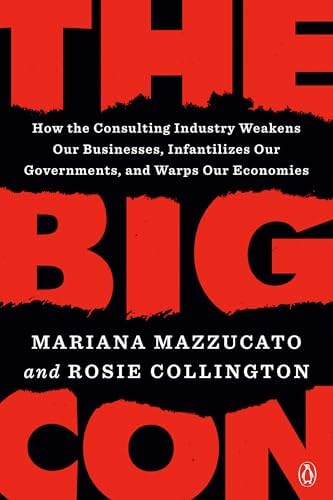
The Big Con argues that consultants have weakened businesses and "infantilized governments" by substituting for core state capabilities, with the UK paying Deloitte £1.5 million daily for failed COVID test and trace.
State capacity includes budget and personnel, but dynamic capabilities involve agility, flexibility, and ability to pivot during crises like COVID's inter-ministerial coordination.
Consultants often work "both sides of the street" - PwC consulting for both medical device companies and their regulators in Australia, creating conflicts of interest that "should just be illegal."
NASA's Ernest Brackett warned in the 1960s about "too many consultants in these corridors," saying "if this continues, we will get captured by brochuremanship" - investing internally to work smartly with external partners.
Mission-Oriented Policy: From Moon Shots to School Lunches
NASA's Apollo program exemplified mission-oriented policy by working with 400,000 private sector people using outcome-based procurement to solve specific problems like astronaut bathroom facilities and nutrition.
"We're doing it because it's hard, not because it's easy" - Kennedy's approach contrasts with modern policy papers focused on "facilitating" and "de-risking" rather than tackling difficult challenges.
Sweden's mission of a "fossil-free welfare state" led to concrete policies like healthy, tasty, sustainable school meals requiring coordination across agriculture, health, education, and finance departments.
Missions should address big problems requiring cross-sectoral innovation rather than focusing on specific sectors, technologies, or firm types like traditional industrial policy.
AI Governance and the Talent Hemorrhage
AI companies are paying "trillions, not billions" in excess profits to hire top researchers from universities and government agencies like NASA, DARPA, and CSIRO, concentrating knowledge in private hands.
"This hemorrhaging of talent of top research expertise... literally is the biggest change" because it makes governing AI ethically much harder when government lacks understanding of the technology.
The Age of Surveillance Capitalism insight that "you think you're searching Google for free, they're searching you for free" could have been avoided through better algorithm design from the start.
AI disclosures similar to climate reporting are needed, with a project exploring "algorithmic rents" and how to reduce excess profits while stimulating innovation through proper regulation.
Successful Government Innovation Examples
UK's Government Digital Services (GDS) became "the coolest place to work" for software engineers by treating citizens as "users with human rights" rather than customers, winning international design awards.
Barcelona's mayor hired "computer hackers into the city government" to use citizen-generated data from Uber and CityMapper clicks to improve public transport and housing decisions.
Germany's public bank KfW provided conditional loans to the steel sector requiring lower material content, resulting in "the greenest steel in the world" through mission-aligned financing.
DARPA's five-year terms for personnel avoid four-year electoral cycles, with explicit instructions to "take risks" and evaluation based on impact of successes, not avoiding failures.


These notes may contain occasional inaccuracies. Learn how Podbrain notes are made
More in Finance & Business

YouTube Video
Jan 1, 1970
The $2B AI Startup Simulating Human Behavior with 85% Accuracy
Oct 26, 2026
AI Agents Could Drive 10,000x More Web Activity | Former Twitter CEO
Oct 24, 2026
Jake Paul's Business Partner on Bitcoin, AI & the Next Trillion-Dollar Trade | Geoff Woo
Jul 13, 2026
Talk Your Book: Do We Need the Federal Reserve?
Jul 13, 2026
.svg)