
Julia Shaw: Criminal Psychology of Murder, Serial Killers, Memory & Sex
Julia Shaw is a criminal psychologist and author who has written extensively on human nature's darker aspects, including the psychology of evil, false memory manipulation, bisexuality, and environmental crime. Her books include...

Episode


- 01
Evil exists on a continuum - the dark tetrad traits (psychopathy, sadism, narcissism, Machiavellianism) are scales we all score on, not binary monster/non-monster labels
- 02
70% of people can be convinced they committed a crime that never happened using leading interview techniques in just three sessions - Julia Shaw
- 03
Most murder happens for trivial reasons like '$4 debt' or stolen bikes, not psychopathic planning, yet recidivism for homicide is only 1-3%
- 04
False memories are a feature, not a bug - every autobiographical memory contains some degree of falsehood, though we usually remember the 'gist' accurately
- 05
Research shows 70% of men and 50%+ of women have fantasized about killing someone, which may be psychologically adaptive for rehearsing moral boundaries
- 06
Bisexuality research reveals most people historically fell somewhere on Kinsey's 0-6 scale rather than exclusively heterosexual or homosexual categories
- 07
Environmental crimes like Volkswagen's Dieselgate involve smart engineers knowingly harming public health through conformity and corporate rationalization pressures
Get the latest ideas from Lex Fridman.
Plus the best new takeaways from other top podcasts — read in minutes, not hours.
By continuing, you agree to podbrain's Terms and Privacy Policy.
These notes may contain occasional inaccuracies. Learn how podbrain notes are made
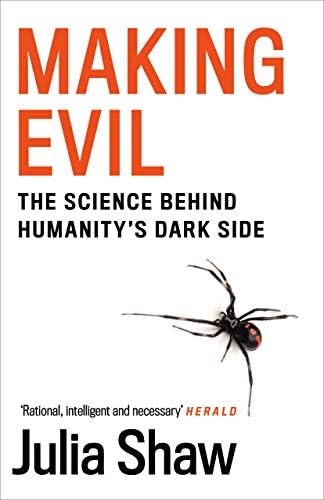
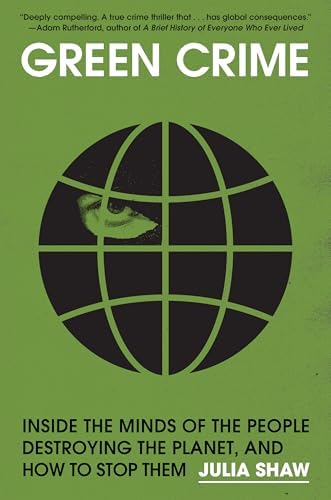
Julia Shaw is a criminal psychologist and author who has written extensively on human nature's darker aspects, including the psychology of evil, false memory manipulation, bisexuality, and environmental crime. Her books include Evil The Science Behind Humanity's Dark Side, The Memory Illusion, Bi The Hidden Culture, History, and Science of Bisexuality, and the upcoming Green Crime Inside the Minds of the People Destroying the Planet and How to Stop Them.
The conversation explores Shaw's research on the continuum nature of evil traits, her groundbreaking false memory experiments, and the psychology behind environmental crimes. Shaw argues against labeling people as 'evil,' instead advocating for understanding the psychological and social factors that lead to harmful behavior. Her work spans from implanting false memories of crimes in laboratory settings to analyzing corporate environmental destruction.
Shaw also discusses her research on bisexuality, drawing from Alfred Kinsey's pioneering work in Sexual Behavior in the Human Male and the historical evolution of sexuality research. The discussion covers memory's unreliability, the psychology of serial killers, and practical applications for criminal justice reform.
The Dark Tetrad: Evil as a Spectrum, Not Binary
Evil The Science Behind Humanity's Dark Side presents the dark tetrad - psychopathy, sadism, narcissism, and Machiavellianism - as continuums rather than binary categories, with everyone scoring somewhere on each scale.
Shaw argues the word 'evil' should not describe humans because 'it's the end of a conversation' - it creates artificial differentiation that prevents understanding why people commit terrible acts.
The baby Hitler thought experiment reveals whether people believe evil is innate or socialized - Shaw argues Hitler wasn't born evil and his early life didn't showcase the traits that later defined his horrific actions.
War requires both dehumanization and de-individuation, where people collapse empathy for 'the other side' while being absorbed into group identity that provides 'the cloak of justice.'
Serial Killers and the Psychology of Extreme Violence
Serial killers often suffer from profound loneliness and reality monitoring problems, becoming untethered from social networks that normally provide grounding in reality.
Robert Picton, the Canadian serial killer who fed victims to pigs, exemplifies how isolation combined with dark tetrad traits can lead to extreme radicalization of thought.
Research shows 70% of men and over 50% of women have fantasized about killing someone - these murder fantasies may be adaptive 'dress rehearsals' for moral decision-making.
Most murder actually occurs for trivial reasons like debt disputes or stolen property, not elaborate psychopathic planning, yet recidivism rates for homicide are only 1-3%.
False Memory Engineering: How Easily We Rewrite the Past
Shaw's groundbreaking research showed 70% of participants could be convinced they committed a crime that never happened using leading questions and imagination exercises over just three sessions.
The Memory Illusion explains that every autobiographical memory contains some degree of falsehood - the question isn't whether memories are false, but 'how false?'
False memories are a feature, not a bug - they result from our minds creatively recombining information to solve present problems, optimizing for 'gist memory' over verbatim details.
Memory modification happens through social interaction - even short police interviews can fundamentally change witness stories through leading questions and suggestive information.
AI systems create 'the ultimate false memory machine' by telling people what they want to hear without safeguards against users accepting AI-generated content as personal truth.
Bisexuality Research: Challenging the Binary
Bi The Hidden Culture, History, and Science of Bisexuality emerged from Shaw's difficulty finding research on bisexual people, often published under terms like 'plurisexual.'
Alfred Kinsey's Sexual Behavior in the Human Male in the 1940s found about half of men scored somewhere between exclusively heterosexual (0) and exclusively homosexual (6) on his famous scale.
The Klein Sexual Orientation Grid adds dimensions like past/present/ideal identity, lifestyle, and social preferences, helping people identify 'troubled' aspects of their sexuality.
Bisexual men face unique challenges - they're more likely to identify as gay or straight due to biphobia within both straight and gay communities.
Environmental Crime: Smart People Doing Terrible Things
Green Crime Inside the Minds of the People Destroying the Planet and How to Stop Them applies criminal psychology to environmental destruction, examining cases like Volkswagen's Dieselgate scandal.
Volkswagen engineers knowingly created 'defeat devices' for 10 years that made diesel cars appear to emit safe levels of nitrous oxides, despite knowing any amount damages human lungs.
Environmental crimes involve 'some of the smartest people in the world' - unlike typical violent crime perpetrators who are often vulnerable individuals with mental health or substance issues.
Corporate environmental crime spreads through conformity and market pressure - when competitors cheat successfully, honest companies feel forced to cheat to survive.





These notes may contain occasional inaccuracies. Learn how podbrain notes are made
More in Science & Tech

The 5-Minute AI Weekly Recap: Realignment Week
Jun 20, 2026
Why Kalshi's John Wang Says Perps Are 'the Most Pure Trading Instrument'
Jun 19, 2026Your Company Doesn’t Need an AI Strategy
Jun 19, 2026
The data black hole at the center of AI
Jun 19, 2026
The New Rules of Media | Marc Andreessen & Ben Horowitz
Jun 19, 2026
.svg)