
HIGHLIGHTS: Arvind Krishna - CEO of IBM
Nikola Tangen, CEO of the Norwegian Sovereign Wealth Fund, interviews Arvind Krishna, Chairman and CEO of IBM, in New York. Krishna has been with IBM for over 35 years, becoming CEO in 2020 and leading one of the most striking turnarounds in big tech.


- 01
IBM transformed from declining legacy company to hybrid cloud and AI leader, with software now representing almost half of total revenue
- 02
Arvind Krishna predicted AI's massive impact in 2019, three years before ChatGPT made it mainstream, comparing it to the internet revolution
- 03
Watson's failure taught IBM that monolithic AI applications in complex verticals like healthcare were premature for 2011 technology capabilities
- 04
Quantum computing will unlock three key areas by 2029: materials science, financial risk pricing, and complex optimization problems
- 05
Malcolm Gladwell called Krishna 'the cleverest person he had met,' highlighting his strategic thinking in orchestrating IBM's turnaround
- 06
The 'getting fired mentality' philosophy encourages doing the right thing without fear of consequences when you have confidence in your abilities
- 07
30% of truck miles and containers run empty due to routing limitations that quantum computers could potentially solve
- 08
Current AI is 'industrial scale' compared to Watson's 'bespoke' approach, handling multiple use cases and adapting to new data
Get the latest ideas from In Good Company with Nicolai Tangen.
Plus the best new takeaways from other top podcasts — read in minutes, not hours.
By continuing, you agree to Podbrain's Terms and Privacy Policy.
These notes may contain occasional inaccuracies. Learn how Podbrain notes are made
Nikola Tangen, CEO of the Norwegian Sovereign Wealth Fund, interviews Arvind Krishna, Chairman and CEO of IBM, in New York. Krishna has been with IBM for over 35 years, becoming CEO in 2020 and leading one of the most striking turnarounds in big tech.
The conversation covers IBM's transformation from a declining legacy company to a hybrid cloud and AI leader, Krishna's early prediction of AI's massive impact, and the lessons learned from Watson's failure. They also discuss quantum computing's potential applications and Krishna's leadership philosophy, including insights from Malcolm Gladwell, who described Krishna as exceptionally intelligent in his work exploring success patterns similar to those analyzed in Outliers The Story of Success.
IBM's Strategic Transformation from Hardware to Hybrid Cloud
IBM is now 'largely a hybrid cloud and AI software company' with software representing almost half of total revenue, consulting at one-third, and hardware only 20%
Krishna's diagnosis when taking over: 'We were trusted, but we were considered to be part of the past, not necessarily the future' - requiring focus on future-relevant technologies
The strategy involved doubling down on hybrid cloud transition and sovereignty concerns, with Krishna convinced since 2019 that 'AI would be big' three years before mainstream adoption
AI's Revolutionary Impact Compared to Previous Technology Shifts
Krishna believes AI is 'bigger than mobile and bigger than cloud' and 'probably in the same category as internet' but not the '10 times the internet' that some predict
The internet enabled global business scale, cross-country work movement, and supply chain integration - 'The direct revenue, even to the technology providers, is measured in the trillions today'
Krishna's early AI conviction came from recognizing that 'Data is going to overwhelm you and value is going to be derived from data' with AI as the only technology to unlock that value
Watson's Lessons and Modern AI's Industrial Scale Advantages
Watson proved AI could handle natural language questions with 'hidden puns and language' by winning Jeopardy in 2011, but failed due to 'monolithic applications' approach in healthcare
The mistake was choosing 'the vertical that is the hardest, health' instead of corporate applications like customer care or document processing
Modern AI is 'industrial scale' versus Watson's 'bespoke' approach - today's AI 'can do many use cases' and adapts when 'some of the data changes'
Quantum Computing's 2029 Timeline and Three Key Applications
Quantum computers 'harness properties of quantum mechanics to do a new kind of math' beyond traditional arithmetic or GPU matrix mathematics
First application area is materials science: better coatings for aircraft wings, pharmaceutical drug design, improved fertilizers, and potentially superior magnets for electrification
Financial risk pricing will benefit from quantum computers pricing 'complex instruments or derivatives or bonds' in milliseconds rather than using day-old data
Optimization problems like route planning could solve the issue that '30% of all truck miles and containers are empty' due to overly simple routing algorithms
Leadership Philosophy and the Getting Fired Mentality
A mentor told Krishna 15 years ago: 'You should live in pleasure of being fired' - meaning freedom from fear enables doing the right thing
The philosophy doesn't mean 'always pick a fight' but rather having confidence in abilities removes the fear that prevents proper decision-making
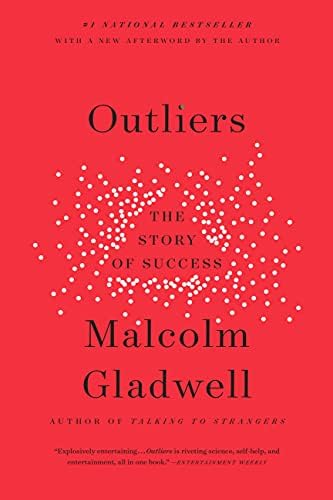
Malcolm Gladwell, author of Outliers The Story of Success, called Krishna 'the cleverest person he had met,' reflecting the analytical thinking that drives IBM's strategic transformation

These notes may contain occasional inaccuracies. Learn how Podbrain notes are made
More in Finance & Business

YouTube Video
Jan 1, 1970
The $2B AI Startup Simulating Human Behavior with 85% Accuracy
Oct 26, 2026
AI Agents Could Drive 10,000x More Web Activity | Former Twitter CEO
Oct 24, 2026
Jake Paul's Business Partner on Bitcoin, AI & the Next Trillion-Dollar Trade | Geoff Woo
Jul 13, 2026
Talk Your Book: Do We Need the Federal Reserve?
Jul 13, 2026
.svg)