
Room & Board: John Gabbert. A Broken Deal, a Family Rift, and the Birth of a Furniture Giant
John Gabbert, founder of Room and Board, left his family's traditional furniture business Gabberts to create a modern American-made furniture brand inspired by IKEA's vertical integration model. Born in 1946, Gabbert grew up working in his father's Minneapolis furniture store, which sold colonial-style pieces with...


- 01
John Gabbert's 1972 IKEA visit revealed how retailers could design furniture and control manufacturing, inspiring Room and Board's vertical integration model
- 02
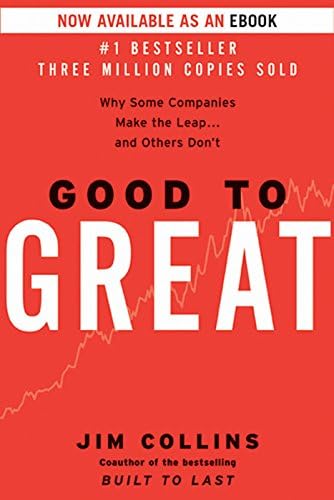
Good to Great by Jim Collins became Gabbert's management 'Bible' after becoming president at 23 with no formal training
- 03
Room and Board maintained 8% profit margins to survive economic downturns - 'when sales drop 20%, we break even but don't cut operations'
- 04
The company rejected all private equity offers: 'They think they're smarter than owners and over-leverage businesses, causing more failures than growth'
- 05
American manufacturing remained competitive despite 30% wage disadvantage through freight savings, quality control, and simple designs emphasizing materials over labor
- 06
Family business tensions led to decade-long estrangement when father reneged on succession agreement, forcing Gabbert to trade 30% ownership for Room and Board division
- 07
Walker Art Center's contemporary design exhibitions, particularly Martin Purrier's raw steel sculptures, directly influenced Room and Board's signature steel-frame aesthetic
Get the latest ideas from How I Built This with Guy Raz.
Plus the best new takeaways from other top podcasts — read in minutes, not hours.
By continuing, you agree to Podbrain's Terms and Privacy Policy.
These notes may contain occasional inaccuracies. Learn how Podbrain notes are made
John Gabbert, founder of Room and Board, left his family's traditional furniture business Gabberts to create a modern American-made furniture brand inspired by IKEA's vertical integration model. Born in 1946, Gabbert grew up working in his father's Minneapolis furniture store, which sold colonial-style pieces with floral fabrics - far from the mid-century modern aesthetic people associate with that era.
The conversation covers Gabbert's transformative 1972 trip to Sweden where he discovered IKEA's revolutionary approach of designing furniture and controlling manufacturing. This insight, combined with management principles from Good to Great and Leadership and the New Science, shaped his vision for Room and Board as a vertically integrated company partnering with specialized American manufacturers.
Gabbert discusses the painful family business breakup in 1980 when his father refused to honor a succession agreement, leading to a decade of estrangement. He traded his 30% stake in Gabberts for the experimental Room and Board division, eventually building it into a hundreds-of-millions furniture company that transitioned to employee ownership through an ESOP structure.
The IKEA Revelation That Changed Everything
Gabbert's 1972 European tour introduced him to IKEA when they had only a couple stores in Sweden and one in Germany, revealing a revolutionary business model where retailers designed furniture and controlled manufacturing rather than just selling what manufacturers made.
Traditional American furniture retail meant going to North Carolina markets and selecting from manufacturer catalogs with no control over product lifecycle - 'if it sold well for us in Minneapolis but not the rest of the country, they would drop it and you'd be starting over' - Gabbert.
IKEA's approach of designing everything and having Eastern European manufacturers produce to their specifications 'turned the process upside down' and made 'a whole lot more sense from the retailer's point of view' - Gabbert.
Learning Management at 23 Without a Playbook
Gabbert became president of Gabberts at age 23 when his father began spending six months annually in Florida, managing everything from inventory to personnel despite having no formal business degree.
Good to Great by Jim Collins became Gabbert's management foundation: 'that literally became my Bible' for understanding leadership principles when managing employees mostly older than himself.
Margaret Wheatley's Leadership and the New Science provided a second major influence, offering 'a kind of different point of view' on management philosophy beyond traditional approaches.
Early frustrations included 100% commission salespeople who 'were working for themselves, not for you' and manufacturers controlling product decisions regardless of local market success.
Family Business Breakup and Starting Over
In 1977, Gabbert and his father signed a legal agreement for John to buy controlling interest by October 1980, but his father refused to honor it, saying 'I'm not going to do it' despite the clear documentation.
When Gabbert approached his three siblings for support to gain 60% control, 'they all chose not to vote with me' and sided with their father instead.
Rather than pursue costly litigation against family, Gabbert traded his 30% Gabberts ownership (worth about $800,000) for full ownership of the experimental Room and Board division with three locations in Minneapolis and Denver.
The family estrangement lasted over a decade: 'I basically didn't see family for at least 10 years' while living in the same city and competing businesses.
Building American Manufacturing Partnerships
Room and Board's breakthrough came from partnering with a security gate manufacturer to create steel-frame Parsons tables - 'we found actually a security gate manufacturer had a tiny little factory and said, How about making some furniture?' - Gabbert.
The steel aesthetic was directly influenced by Walker Art Center exhibitions, particularly Martin Purrier sculptures with 'raw steel, simple steel that was welded' where 'you can see the weld marks' - inspiring furniture applications.
American manufacturing remained competitive despite 30% wage disadvantage because 'between freight and quality and a series of other things, we could make up that difference' for simple designs emphasizing materials over labor.
The company operates as 'vertically integrated through partnership' - caring about manufacturer profitability and growth 'virtually as if we own that business, but we don't.'
Rejecting Private Equity and Choosing Employee Ownership
Despite 'tons of approaches' from private equity firms promising growth and cash, Gabbert rejected all offers because 'they've ruined more businesses than they've grown' by over-leveraging and forcing unsustainable growth.
Room and Board maintained strict financial discipline with 8% target profit margins and no bank debt for years, enabling survival during economic downturns when 'the economy drops 2%, the furniture business will probably drop 20 or 25%.'
The company transitioned to 100% employee ownership through an ESOP structure with owner financing rather than bank loans, giving employees substantial ownership stakes over time.
Strategic decisions included saying no to premature expansion: 'Sometimes the decisions you made where you did nothing is the most important decision in the business' - rejecting Los Angeles before being ready.

These notes may contain occasional inaccuracies. Learn how Podbrain notes are made
More in Finance & Business

YouTube Video
Jan 1, 1970
The $2B AI Startup Simulating Human Behavior with 85% Accuracy
Oct 26, 2026
AI Agents Could Drive 10,000x More Web Activity | Former Twitter CEO
Oct 24, 2026
Jake Paul's Business Partner on Bitcoin, AI & the Next Trillion-Dollar Trade | Geoff Woo
Jul 13, 2026
Talk Your Book: Do We Need the Federal Reserve?
Jul 13, 2026
.svg)