
Tony Xu, DoorDash
Tony Xu, CEO and co-founder of DoorDash, discusses building the delivery giant from a 43-minute MVP called PaloAltoDelivery.com to a company serving tens of millions of items across 40+ countries. David Senra hosts this conversation exploring DoorDash's unconventional founding story and operational philosophy.

- 01
DoorDash started as PaloAltoDelivery.com - a $9 website with PDF menus where founders personally took calls and did deliveries using Square card readers
- 02
Early experiments revealed deliveries were faster in suburbs than cities due to easier parking and single-family homes versus apartment complexes
- 03
Tony Xu does customer support daily to stay connected to edge cases: 'The greatest killer of a business is usually silence'
- 04
DoorDash runs 'tens of thousands of experiments' annually because 'it's always the data that you can't see that kills you' in the physical world
- 05
The company faced over 100 investor rejections during a 'thousand days of hell' fundraising period despite strong internal metrics
- 06
DoorDash's eternal mission is 'to grow and empower local economies' by making small and medium businesses successful in their cities
- 07
Tony Xu doesn't track DoorDash's stock price: 'What am I going to do on a daily basis knowing what the stock price is?'
- 08
The company operates two management systems: scaling existing businesses post-product-market-fit and inventing new 'paper airplane' experiments
Get the latest ideas from David Senra.
Plus the best new takeaways about science from other top podcasts — read in minutes, not hours.
By continuing, you agree to Podbrain's Terms and Privacy Policy.
These notes may contain occasional inaccuracies. Learn how Podbrain notes are made
Tony Xu, CEO and co-founder of DoorDash, discusses building the delivery giant from a 43-minute MVP called PaloAltoDelivery.com to a company serving tens of millions of items across 40+ countries. David Senra hosts this conversation exploring DoorDash's unconventional founding story and operational philosophy.
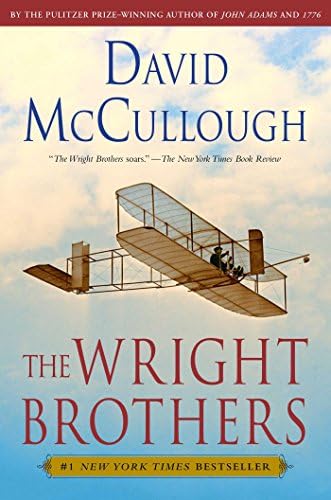
The conversation covers DoorDash's early discovery that suburban delivery was more efficient than urban markets, the company's experimental culture running thousands of tests annually, and Xu's daily customer support practice. Key topics include the 'thousand days of hell' fundraising period, lessons from Zero to One about monopoly building, and insights from The Wright Brothers biography about solving problems with constrained resources.
Xu explains DoorDash's evolution from restaurant delivery to a comprehensive local commerce platform, their autonomous vehicle development, and the dual management systems needed to scale existing businesses while inventing new solutions. The discussion also touches on hiring practices, the influence of Sam Walton Made In America on understanding suburban markets, and how AI is transforming company operations.
The 43-Minute MVP That Started DoorDash
PaloAltoDelivery.com launched in 43 minutes as a static website with eight PDF menus, a Google Voice number routing to founders' cell phones, and Square card readers for payment processing.
The $9 domain name wasn't scalable but was available, and the four founders personally took orders, placed them with restaurants, picked up food, and delivered it themselves.
The experiment tested whether consumers wanted delivery from restaurants that never offered it before, since only 20,000-25,000 of America's one million restaurants offered delivery in 2013.
The Suburban Delivery Advantage Discovery
Early experiments revealed deliveries were completed faster in Palo Alto than San Francisco despite lower density, due to easier parking and single-family homes versus apartment complexes.
Suburban customers were primarily mothers with young children who valued convenience over walking miles to restaurants, creating strong organic demand without marketing spend.
This discovery paralleled Sam Walton's insight from Sam Walton Made In America about finding business opportunities in small towns where customers would 'drive vast distances to save money.'
The hub-and-spoke geography of suburbs (main street commerce with residential spokes) created more efficient logistics than dense city centers.
Building Systems for the Chaotic Physical World
Tony Xu does customer support daily because 'the greatest killer of a business is usually silence' and customers who complain provide free feedback on edge cases.
DoorDash runs 'tens of thousands of experiments' annually because 'it's always the data that you can't see that kills you' in the unstructured physical world.
The company decomposes deliveries into 20 steps, each with potential delays, requiring constant experimentation since 'there's about 20 steps you can decompose a delivery into. And there's delays at each one of those moments.'
Success comes from getting '5% out of tens of thousands of experiments to work in one year' which creates 'compounding surplus for all of the audiences' the following year.
The Thousand Days of Fundraising Hell
Despite strong internal metrics, DoorDash faced over 100 investor rejections during a three-year period starting in 2016 when public markets tanked and the sector was viewed as 'toxic.'
The company nearly ran out of cash multiple times while competitors like Uber and Amazon were better funded, creating a narrative that DoorDash 'could do no right.'
Xu managed psychology by focusing on controllable factors: 'We got to keep growing and keep taking share. We got to get more profitable and we can't run out of cash. There's no or in any of these statements.'
The experience taught the importance of genuine workplace friendships and maintaining personal routines like exercise and date nights during extreme stress.
Hiring Rhodes Scholars Who Meet Navy SEALs
DoorDash looked for candidates with both analytical intelligence and bias for action, since the physical world requires 'doing things to go figure those things out' rather than just data analysis.
Final interviews involved giving candidates $20 and eight hours to 'go and acquire 100 customers for us' or doing deliveries together in Xu's Honda to test real-world problem-solving.
Key traits included strong followership (people who attracted like-minded teams), obsession with continuous improvement, and willingness to master details at the 'lowest level.'
Christopher Payne, the first COO, drove four hours doing deliveries after an interview and wrote a 3,000-word analysis of the logistics algorithm without being asked.
The Eternal Mission and Dual Management Systems
DoorDash's eternal mission is 'to grow and empower local economies' because successful small businesses 'produce the vast majority of jobs and consumption dollars for the economy.'
The company operates two management systems: scaling post-product-market-fit businesses and running 'paper airplane' experiments searching for new product-market fit.
Xu doesn't track DoorDash's stock price, asking 'What am I going to do on a daily basis knowing what the stock price is? Am I going to behave any differently?'
Drawing inspiration from Zero to One, Xu believes in building monopoly-like advantages through solving problems others can't, rather than competing in existing markets.
Expanding Beyond Food Delivery
DoorDash delivers 'a very small fraction' of the 'tens of millions of items inside of a city that you could deliver' with massive expansion opportunities ahead.
New products include DoorDash Fulfillment Solutions for retailers like Kroger and CVS, operating warehouses to enable perfect accuracy and fast delivery.
The company built purpose-designed autonomous vehicles after six years of development, since existing robo-taxi solutions couldn't solve last-mile delivery challenges like navigating crowded merchant areas.
The goal is becoming 'your first phone call to start any business' by offering comprehensive services from app building to customer acquisition to inventory management.


These notes may contain occasional inaccuracies. Learn how Podbrain notes are made
.svg)