
Diarmaid MacCulloch on Christianity, Sex, and Unsettling Settled Facts
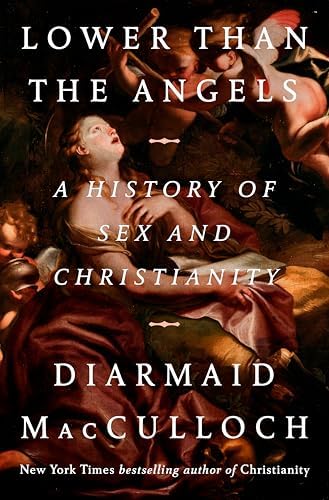
Tyler Cowen interviews Diarmaid MacCulloch, Emeritus Professor of Church History at Oxford and author of the new book Lower than the Angels A History of Sex and Christianity. MacCulloch is recognized as one of the foremost historians of Christianity, with each...


- 01
Christianity introduced baptism as an egalitarian innovation - unlike male circumcision in Judaism, both men and women could receive it
- 02
The 12th-century celibacy requirement for Western clergy transformed marriage theology, making procreation central to valid marriage
- 03
Medieval cathedrals were 'factories of prayer' funded by nobility seeking salvation through purgatory, creating Europe's architectural legacy
- 04
Protestant Reformation reversed Christian ideals by making married clergy the model Christian life instead of celibate monks
- 05
Michel Foucault's assertion that homosexuality was invented in 1869 is 'so stupid and so French' - MacCulloch
- 06
English parish system created unprecedented religious coverage - virtually every location in Europe had pastoral care within walking distance
- 07
Hell doctrine is 'profoundly unconvincing' and unnecessary for sustainable Christianity, unlike Eucharistic faith - MacCulloch
- 08
Historians keep 'the human race sane' by unsettling settled facts and preventing society from listening to lies
Get the latest ideas from Conversations with Tyler.
Plus the best new takeaways from other top podcasts — read in minutes, not hours.
By continuing, you agree to podbrain's Terms and Privacy Policy.
These notes may contain occasional inaccuracies. Learn how podbrain notes are made
Tyler Cowen interviews Diarmaid MacCulloch, Emeritus Professor of Church History at Oxford and author of the new book Lower than the Angels A History of Sex and Christianity. MacCulloch is recognized as one of the foremost historians of Christianity, with each of his books over a 50-year career being considered essential reading.
The conversation explores the complex relationship between monotheism and monogamy, examining how Christianity's early egalitarian impulses were gradually suppressed by patriarchal structures. MacCulloch traces key transformations in Christian sexual ethics, particularly the revolutionary changes of the 12th century when mandatory clerical celibacy reshaped marriage theology.
They discuss the architectural legacy of medieval Christianity, the Protestant Reformation's impact on family structures, and critiques of modern scholarship including Michel Foucault's The History of Sexuality. The interview concludes with reflections on contemporary religious decline, the sustainability of Christian belief systems, and MacCulloch's future research plans after completing what he considers his most important work.
Christianity's Egalitarian Innovation Through Baptism
Christianity introduced baptism as a revolutionary departure from Judaism's male-only circumcision, creating the first major religion where both sexes received equal initiation rites.
Paul's writings in 1 Corinthians contain 'really extraordinary' language stating that 'the wife's body is not her own, it belongs to the husband' but then reverses it, declaring the husband's body belongs to the wife - MacCulloch.
Most Christian generations ignored this egalitarian foundation, with Eastern Orthodox Christianity spiritualizing away the bodily equality while Western canon lawyers maintained marriage's physical dimension.
The 12th Century Revolution in Marriage and Celibacy
Mandatory clerical celibacy emerged from changing Eucharist theology - as bread and wine became literally Christ's body and blood through priestly power, sexual purity became essential for clergy.
This created 'copulating laity' as the logical counterpart to celibate clergy, making procreation central to valid marriage for the first time in Christian history.
Before the 12th century, deliberately celibate marriages were common and celebrated, exemplified by Saint Ethelreda who refused sex with two Anglo-Saxon kings and founded a monastery.
Spousal consent became important by the 12th century, but for 1,200 years marriage remained 'a contract between two men: the father of the bride and the father of the groom' - MacCulloch.
Medieval Cathedral Building as Prayer Factories
The 'age of cathedrals' in the 12th-13th centuries resulted from the Western Church's development of purgatory doctrine, creating demand for prayer to reduce time in the intermediate afterlife state.
Cathedrals and monasteries became 'factories of prayer' with multiple altars and side chapels, funded by nobility seeking salvation through clerical intercession.
The parish system created unprecedented religious coverage - 'virtually every location in Europe had pastoral care' with priests able to visit all parishioners within a day's walk.
MacCulloch's favorite English church is St. Mary in Wetherden, Suffolk, containing 'every architectural style from the 12th century through to the 20th' with furnishings of every age.
Protestant Reformation's Reversal of Christian Ideals
Luther's concept of 'justification by faith alone' meant 'salvation is really in the hands of God, not in the hands of the clergy,' undermining the entire medieval prayer economy.
Protestantism 'put the minister on the pedestal as the way that all Christians should live' by making married clergy the model Christian life instead of celibate monks.
The destruction of monasteries eliminated 'this absolutely central part of medieval Western Christianity' and replaced monastic ideals with clerical family life as the Christian standard.
Critique of Modern Sexuality Scholarship
Michel Foucault's The History of Sexuality contains 'a lot of things wrong' and should be taken 'with several pinches of salt,' particularly his claim about homosexuality's 19th-century invention.
Foucault's assertion that homosexuality was invented in 1869 because the word was coined then is 'so stupid and so French' - you can see modern-style same-sex relationships in the ancient world.
John Boswell's Christianity, Social Tolerance, and Homosexuality and Alan Bray's The Friend contain 'special pleading' influenced by their Roman Catholic conversions, incorrectly arguing Christianity was historically hospitable to same-sex relations.
Contemporary Christianity and the Future of Faith
Hell doctrine is 'profoundly unconvincing' and unnecessary for sustainable Christianity - 'Human beings are very capable of creating hells' without requiring eternal damnation beliefs.
Eucharistic faith and 'religion of sacred place' are more sustainable than Reformed Protestantism, which loses appeal once you 'remove the stick from religion.'
England has become 'exhilaratingly multicultural' with more Hindus than Muslims, while the Church of England maintains its unique mission to 'minister to those beyond its walls.'
MacCulloch's Lower than the Angels A History of Sex and Christianity may be his 'most important' work after 50 years of writing, covering 'the widest topic' he has addressed.





These notes may contain occasional inaccuracies. Learn how podbrain notes are made
More in Philosophy

Spielberg Just Revealed The Truth About Aliens (He Knows!)
Jun 25, 2026
Which Of These Are You? | What's In Your Way Is The Way
Jun 25, 2026It Goes In Only One Direction
Jun 24, 2026
The Mindset of a World Cup Champion | Carli Lloyd
Jun 24, 2026
Peter McGrath
Jun 24, 2026.svg)