
Andrew Ross Sorkin on Market Bubbles, Banking Rules, and the Real Lessons of 1929
Tyler Cowen interviews Andrew Ross Sorkin, award-winning New York Times journalist, CNBC Squawk Box co-anchor, and founder of DealBook. Sorkin is the bestselling author of Too Big to Fail, co-producer of its Emmy-nominated film adaptation, and co-creator of the drama series Billions.


- 01
RCA stock fell from multi-hundred dollars to $3 within three years after the 1929 crash, yet 30-year returns from 1929 still averaged 6-7% annually
- 02
Charles Merrill told people to exit stocks in early 1928, missing a 90% gain before the October 1929 crash - 'what a mistake that was' - Sorkin
- 03
John Raskob was 'the Elon Musk of his time' who built the Empire State Building and proposed the five-day workweek in November 1929
- 04
Glass-Steagall was 'corrupted' - parts were written by Rockefeller family members to target J.P. Morgan, not from pure regulatory motives
- 05
Private credit now represents 80% of lending versus 20% for traditional banks, creating a 'shadow banking system' with unknown risks
- 06
The Fed was never truly independent - board members in the 1920s worried about being 'hauled up in front of Congress' for policy decisions
- 07
Consumer debt culture began in 1919 when GM's John Raskob created car loans - before then 'you were the dregs of the universe if you were a debt holder'
- 08
Sorkin's wife has banned him from writing another book until their three children go to college, though he's plotting a tulip mania story
Get the latest ideas from Conversations with Tyler.
Plus the best new takeaways from other top podcasts — read in minutes, not hours.
By continuing, you agree to podbrain's Terms and Privacy Policy.
These notes may contain occasional inaccuracies. Learn how podbrain notes are made
Tyler Cowen interviews Andrew Ross Sorkin, award-winning New York Times journalist, CNBC Squawk Box co-anchor, and founder of DealBook. Sorkin is the bestselling author of Too Big to Fail, co-producer of its Emmy-nominated film adaptation, and co-creator of the drama series Billions.
The conversation centers on Sorkin's latest work, 1929 Inside the Greatest Crash in History and How It Shattered a Nation, exploring whether the 1929 stock prices were actually justified given America's subsequent century of growth. They examine parallels between the 1920s speculation and modern financial markets, the role of leverage in both eras, and the construction of New Deal banking regulations.
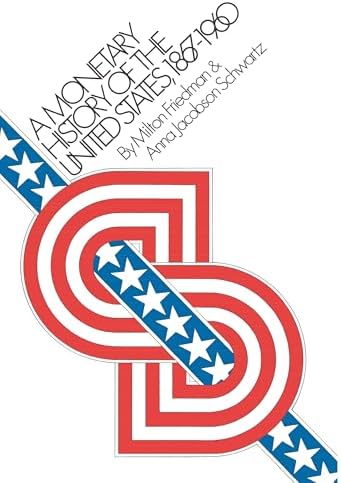
The discussion ranges from Federal Reserve independence and the shadow banking system to the personalities of 1920s business leaders like John Raskob, the political machinations behind Glass-Steagall legislation, and lessons for contemporary financial regulation. Sorkin draws on research influenced by economist Alex Tabarrok and references Milton Friedman's monetary analysis in A Monetary History of the United States.
Were 1929 Stock Prices Actually Justified?
Cowen argues 1929 prices were fundamentally correct given 30-year returns of 6-7%, with companies like RCA representing the future despite falling from hundreds of dollars to $3 by 1932.
Sorkin counters that leverage created artificial price inflation: 'people were walking into brokerage houses all over the country...you'd give them a dollar and they'd give you $10.'
The parallel to 2008 housing: Sorkin notes most home prices have recovered and exceeded 2006 levels, but 'so much of those prices were being inflated with debt.'
Charles Merrill's 1928 warning to exit stocks missed a 90% market gain before the crash, illustrating the difficulty of timing market tops.
Federal Reserve Policy and Political Pressures
Fed board members in 1929 were 'scarred' by 1920-21 recession and worried about being 'hauled up in front of Congress' for aggressive rate hikes.
The Fed 'knew that speculation was getting out of control' by spring 1929 but lacked courage to raise rates sufficiently to dampen speculation.
Cowen advocates for deposit insurance and floating exchange rates as better solutions than trying to fine-tune interest rates to prevent bubbles.
Both agree the Fed was never truly independent: 'they were always concerned about the politics' - Sorkin, with Trump's current Fed criticism as latest example.
Glass-Steagall's Corrupted Origins
Alex Tabarrok's research revealed Glass-Steagall was 'not as pure' as believed - parts were 'written by effectively a member of the Rockefeller family who owned Chase...to just shiv J.P. Morgan.'
Carter Glass 'was not really interested in breaking up banks like J.P. Morgan at all' and 'sided so dearly with J.P. Morgan' that some thought he was 'in the pocket of the bankers.'
Sorkin was 'never convinced by the argument that Glass-Steagall somehow saved us' in 2008, noting failed firms like 'Lehman Brothers, Bear Stearns, none of them would have come under the Glass-Steagall bill.'
Rajan and Kroszner's 1994 research showed the conflict of interest story behind Glass-Steagall 'was never supported by the data...basically imagined.'
The Shadow Banking Revolution
Traditional banks now represent only 20% of lending while 80% comes from the 'shadow banking system' - private credit funds, insurance-linked lending, and other non-bank entities.
Sorkin's 'biggest concern' is the unknown interconnectedness: 'Some of these funds are effectively leveraged by dint of the banks...if it all comes undone at one moment, what happens?'
The more capital requirements are imposed on banks, the more lending shifts to unregulated entities: 'You just make that [banking system] smaller.'
Both express uncertainty about solutions, with Cowen noting 'we just don't know what to replace' New Deal banking regulation with in the modern era.
John Raskob: The Elon Musk of the 1920s
Raskob was 'the Elon Musk of his time' who ran General Motors, built the Empire State Building ('probably the equivalent of SpaceX'), and created consumer credit culture in 1919.
He proposed the five-day workweek in November 1929 'not because he wanted people to work less...because he thought there was an economic argument that if people didn't have to work on Saturdays, more people would buy cars.'
Raskob spent two years secretly undermining Hoover's reputation starting in May 1929, three months after Hoover took office, contributing to Hoover's lasting negative image.
Despite his massive influence, Raskob is 'striking...how forgotten' he is today, illustrating how 'people who think they're doing something today that will be remembered in 100 years' probably won't be.
Modern Financial Risk and Regulation
Sorkin advocates bank consolidation: 'if I was king for the day, I would consolidate most of the banks and make the country look much more like the Canadian banking system.'
On retail access to private credit and venture capital: Cowen argues 'we let people bet on football games' and buy Bitcoin, so restricting sophisticated investment access seems inconsistent.
Both agree people are 'not great at self-regulating' but government officials 'don't become rational just by electing them to office and putting a hat on them that says government.'
The lesson from A Monetary History of the United States supports deposit insurance over trying to prevent crashes: 'the money supply doesn't collapse in the sense that Friedman pointed his finger at.'


These notes may contain occasional inaccuracies. Learn how podbrain notes are made
More in Philosophy

Spielberg Just Revealed The Truth About Aliens (He Knows!)
Jun 25, 2026
Which Of These Are You? | What's In Your Way Is The Way
Jun 25, 2026It Goes In Only One Direction
Jun 24, 2026
The Mindset of a World Cup Champion | Carli Lloyd
Jun 24, 2026
Peter McGrath
Jun 24, 2026.svg)