
Vanguard
This episode covers Vanguard, the company that created the first retail index fund in 1975 and today manages over $10 trillion in passive investments. The hosts are Ben Gilbert and David Rosenthal, exploring how Vanguard's unique mutual ownership structure has made it the largest shareholder of most US corporations.


- 01
Jack Bogle created the first retail index fund in 1976, which today manages $1.5 trillion and has saved investors over $500 billion in fees since Vanguard's founding
- 02
Vanguard's unique mutual ownership structure means fund investors own the company itself, eliminating conflicts between shareholders and customers that plague traditional asset managers
- 03
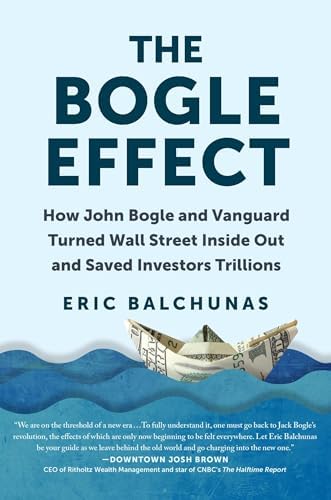
The Bogle Effect argues that Vanguard forced the entire industry to cut fees, creating an additional $500 billion in savings beyond Vanguard's direct impact
- 04
Warren Buffett's 2007 bet proved the Vanguard 500 Index Fund returned 126% over 10 years while hedge funds returned just 36%, validating passive investing
- 05
The 2008 financial crisis became indexing's finest moment as active managers failed to protect investors despite promises of downside protection
- 06
Vanguard now manages $12 trillion across 50 million investors, owning an average of 10% of every S&P 500 company alongside other major index providers
- 07
Jack Bogle was fired twice - once from Wellington in 1974 and again from Vanguard's board in 1999 over his opposition to ETFs
- 08
Despite founding a trillion-dollar company, Bogle's estate was worth only $80 million at his death, leaving potential billions on the table for investors' benefit
Get the latest ideas from Acquired.
Plus the best new takeaways about investing from other top podcasts — read in minutes, not hours.
By continuing, you agree to Podbrain's Terms and Privacy Policy.
These notes may contain occasional inaccuracies. Learn how Podbrain notes are made
This episode covers Vanguard, the company that created the first retail index fund in 1975 and today manages over $10 trillion in passive investments. The hosts are Ben Gilbert and David Rosenthal, exploring how Vanguard's unique mutual ownership structure has made it the largest shareholder of most US corporations.
The story centers on Jack Bogle, who didn't start Vanguard until age 46 after being fired from Wellington Management Company. What began as both an idealistic vision and vindictive response to his firing became a revolution that transferred over $1 trillion from Wall Street fees into individual investors' pockets.
Vanguard's impact extends far beyond its own funds. As The Bogle Effect demonstrates, the company forced the entire investment industry to slash fees, creating additional savings for all investors. The episode traces how Bogle's 'communist capitalism' model - where customers own the company - challenged traditional Wall Street structures.
The narrative follows Vanguard's evolution from a struggling $11 million fund launch to today's $12 trillion colossus, examining how the 2008 financial crisis validated passive investing and exploring current challenges from competitors like Fidelity and BlackRock who've adapted to the low-fee environment Vanguard created.
Jack Bogle's Depression-Era Origins and Princeton Thesis
Jack Bogle was born in May 1929 on the eve of the Great Depression, into a prominent New Jersey family that lost everything during the economic collapse, leaving the three Bogle boys to fend for themselves.
At Princeton, Bogle wrote his senior thesis on 'The Economic Role of the Investment Company' after discovering a Fortune magazine article about mutual funds, earning an A and graduating magna cum laude in 1951.
His thesis presciently argued that minimizing fees was the best way to maximize returns for fundholders, since the aggregate of all funds would perform in lockstep with the market.
Walter Morgan of Wellington Management hired Bogle based on his thesis, and Bogle rose to become president at age 35 in 1965, inheriting a conservative balanced fund approach just as the Go-Go era began.
The Go-Go Years and Wellington's Disastrous Merger
The 1960s Go-Go era, pioneered by Fidelity's Jerry Tsai, emphasized rapid trading and quick profits, making Wellington's conservative balanced approach obsolete as market share fell from 40% to under 1%.
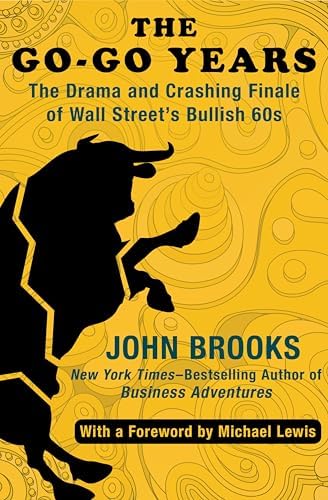
The Go-Go Years by John Brooks described this era as 'rapid in-and-out trading of huge blocks of stock with an eye to large profits taken very quickly' - the opposite of Wellington's philosophy.
Bogle merged Wellington with Boston firm Ivest, giving the four young partners 40% equity despite managing only $17 million versus Wellington's $2 billion, in what many saw as overpaying for talent.
When the Go-Go bubble burst in the 1970s, Wellington's assets crashed from $2 billion to $483 million, and the Ivest fund lost 65% in one year before being shuttered entirely.
Bogle's Mutualization Vision and First Firing
Amid Wellington's losses, Bogle proposed mutualizing the funds - eliminating the management company's profits and operating at cost to serve fundholders exclusively, his 'Jerry Maguire moment.'
On January 23rd, 1974, the four Ivest partners fired Bogle as CEO of Wellington Management Company after he refused to abandon his mutualization plans.
Bogle exploited a legal technicality: while fired from the management company, he remained chairman of the funds' board of directors, which had the power to select their investment manager.
He presented a 250-page feasibility study to the fund board, arguing that the traditional structure was no longer optimal and funds should 'seek greater control over their own destiny.'
Vanguard's Birth and the First Index Fund
The fund board voted narrowly to let Bogle form Vanguard in September 1974, initially handling only back-office administration while Wellington retained investment management and distribution.
Bogle named the company Vanguard after HMS Vanguard, the flagship in the Battle of the Nile where British forces defeated Napoleon, symbolizing total victory over the opposition.
Reading Paul Samuelson's 1974 paper advocating a fund that 'apes the whole market' with minimal fees, Bogle realized he could create an index fund without violating his prohibition on investment advice.
The First Index Investment Trust launched in 1976 with a broken IPO raising only $11.3 million of a $150 million target, forcing them to buy just 280 stocks instead of the full S&P 500.
The Slow Build and Scale Economics Breakthrough
The index fund took 6 years to reach $100 million and another 6 years to hit $1 billion in 1988, surviving only through an emergency merger with the Exeter Fund in 1977.
Vanguard's survival during lean years depended on their fixed income business, where low costs matter most, and the Windsor Fund's exceptional active management performance under John Neff.
As assets grew, Vanguard implemented 'scale economies shared' - continuously lowering fees from 68 basis points at launch to 35 basis points by 1987, following the Costco model.
By the 1990s, the machinery was working: the Vanguard 500 Index Fund reached $10 billion by 1992, and they launched the Total Stock Market Index Fund to own every US stock.
Heart Transplant, Second Firing, and ETF Opposition
Bogle suffered from a rare genetic heart disease, experiencing over 10 heart attacks throughout his life before receiving a heart transplant in 1996 after 128 days in the hospital.
As detailed in Stay the Course, Bogle's memoir, he continued working from his hospital bed and made a miraculous recovery, returning to the squash court within weeks.
In 1999, Bogle was forced off Vanguard's board at age 70 over his staunch opposition to ETFs, which he feared would encourage harmful short-term trading behavior.
Nathan Most had approached Bogle in 1992 to launch the first ETF with Vanguard, but Bogle rejected the idea, allowing State Street to create the SPDR and dominate early ETF markets.
Financial Crisis Vindication and Warren Buffett's Endorsement
The 2008 financial crisis became indexing's finest hour as active managers failed to protect investors despite promises, while index funds simply matched market performance as expected.
Warren Buffett's famous 2007 bet proved the Vanguard 500 Index Fund returned 126% over 10 years while Ted Seides' hedge fund portfolio returned just 36%, validating passive investing.
Buffett wrote in 2016: 'If a statue is ever erected to honor the person who has done the most for American investors, the hands-down choice should be Jack Bogle... He is a hero to them and to me.'
After 2008, Vanguard's market share doubled from 15 cents to 30 cents of every new mutual fund dollar, and from 2014-2019 they captured $1.2 trillion versus $500 billion for all competitors combined.
Modern Challenges and Competitive Threats
Fidelity has successfully competed by focusing on 401(k) plans and retail brokerage, allowing customers to hold Vanguard funds while profiting from other services.
BlackRock's 2009 acquisition of iShares made them the ETF leader with 1,400 funds totaling $3.3 trillion, while Vanguard remains second in the faster-growing ETF market.
Vanguard's mutual ownership structure limits reinvestment in technology and customer service, creating vulnerabilities exposed during the pandemic with poor user experiences.
In 2024, Vanguard hired its first outside CEO, Salim Ramji from BlackRock's iShares division, to address competitive challenges and expand into new areas like private assets.


These notes may contain occasional inaccuracies. Learn how Podbrain notes are made
More in Finance & Business

YouTube Video
Jan 1, 1970
The $2B AI Startup Simulating Human Behavior with 85% Accuracy
Oct 26, 2026
AI Agents Could Drive 10,000x More Web Activity | Former Twitter CEO
Oct 24, 2026
Jake Paul's Business Partner on Bitcoin, AI & the Next Trillion-Dollar Trade | Geoff Woo
Jul 13, 2026
Talk Your Book: Do We Need the Federal Reserve?
Jul 13, 2026
.svg)