
Alphabet Inc.
This episode features Ben Gilbert and David Rosenthal, hosts of Acquired, exploring Google's transformation from a search engine into the innovation factory of the 2000s. The conversation covers Google's expansion beyond search into email, maps, video, mobile operating systems, and web browsers.


- 01
Gmail launched with 1GB free storage when competitors offered 2-4MB, using Ajax technology to create the first truly dynamic web application
- 02
Google bought YouTube for $1.65 billion in 2006 when it was losing $1 billion annually, now generating over $50 billion in revenue
- 03
Android was acquired for $50 million in 2005 and now runs on over 3 billion devices, protecting Google's search dominance in mobile
- 04
Chrome browser launched in 2008 with revolutionary features like V8 JavaScript engine and process isolation, reaching 70% market share
- 05
Google Plus failed spectacularly despite company-wide mandates, costing billions and slowing innovation for years afterward
- 06
By 2015, Google had created 8 products with over 1 billion users each, more than any other company in history
Get the latest ideas from Acquired.
Plus the best new takeaways from other top podcasts — read in minutes, not hours.
By continuing, you agree to Podbrain's Terms and Privacy Policy.
These notes may contain occasional inaccuracies. Learn how Podbrain notes are made
This episode features Ben Gilbert and David Rosenthal, hosts of Acquired, exploring Google's transformation from a search engine into the innovation factory of the 2000s. The conversation covers Google's expansion beyond search into email, maps, video, mobile operating systems, and web browsers.
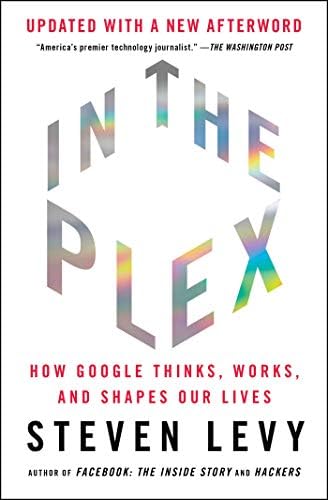
The hosts examine Google's strategic motivation for building web applications as a defense against Microsoft's platform dominance, their acquisition strategy including YouTube and Android, and the eventual reorganization into Alphabet. Key insights come from In the Plex by Steven Levy and Yield by Ari Paparo, along with interviews with Google executives and engineers.
The episode traces Google's hit parade from Gmail's revolutionary Ajax technology through Chrome's browser innovations, culminating in their successful transition from the web era to mobile dominance while maintaining their core advertising business model.
Gmail: The Ajax Revolution That Changed Web Apps Forever
Paul Buchheit invented Gmail starting in 2001, applying real-time indexing technology from Google Groups to personal email and discovering Ajax's XML HTTP request feature to create dynamic web applications.
Gmail launched April 1, 2004 with 1GB free storage versus competitors' 2-4MB limits, using an invite-only system that created viral demand with invites selling for $150 on eBay.
The strategic motivation was defending against Microsoft's platform control - over 90% of Google searches came through Internet Explorer on Windows PCs, creating existential vulnerability.
Gmail pioneered content-matched advertising in email, predating AdSense and proving web applications could be monetized directly rather than just driving search traffic.
Maps and Docs: Building the Web 2.0 Platform Strategy
Google Maps launched February 2005 after acquiring Where To Technologies, initially showing only North America as their minimum viable product for the mapping revolution.
The 2006 Maps API launch enabled the Web 2.0 mashup era, powering future companies like Zillow, Uber, and Airbnb by making location services freely available to developers.
Google Docs and Sheets were the first real-time collaborative software in history, according to founder Sam Schillace, leveraging web technology to enable simultaneous multi-user editing.
These office products strategically forced Microsoft to bring their crown jewels to the web while Google captured over a billion users despite Microsoft retaining most enterprise revenue.
YouTube: From $1.6B Mistake to $50B Media Empire
YouTube was founded by PayPal employees as a video dating site before pivoting to general video uploads, growing through viral content like Saturday Night Live's Lazy Sunday sketch.
Google acquired YouTube for $1.65 billion in stock in November 2006 when it was losing about $1 billion annually, or roughly one penny per view according to early YouTube executive Shishir Mehrotra.
The acquisition was initially viewed as Google's first mistake by Wall Street and internal executives, with the CFO exploring selling it to other bidders during the early loss-making years.
YouTube now generates over $50 billion in annual revenue, making it larger than Disney's entire business and proving to be one of the greatest acquisitions in tech history.
The platform's 50% revenue share with creators established the creator economy model, while its recommendation algorithm evolved from search-based to destination-based consumption.
DoubleClick: The $3.1B Chess Move Against Microsoft
DoubleClick was acquired for $3.1 billion in 2007 after a bidding war with Microsoft, with Yield revealing Steve Ballmer offered a blank check to outbid Google.
The acquisition provided Google access to premium advertising inventory and agency relationships that AdSense couldn't reach, using third-party cookies and sophisticated targeting.
Google's 'hell or high water' clause committed to closing without further diligence, while Microsoft responded by buying competitor Aquantive for $6 billion - twice Google's price.
Unlike Google's other acquisitions, DoubleClick was purely strategic business expansion rather than organizing world's information, generating roughly $30 billion in annual network revenue today.
Chrome: Six Technical Breakthroughs That Liberated the Web
Chrome development began in 2006 with Firefox engineers hired by Google, led by Sundar Pichai, after Eric Schmidt's 2001 decision not to 'moon the giant' Microsoft was reversed.
The browser launched September 2008 with six killer features: V8 JavaScript engine, process isolation per tab, WebKit rendering, minimal UI chrome, the unified Omnibox, and security sandboxing.
Chrome grew from zero to 70% market share, destroying Internet Explorer's dominance and ensuring Google's search distribution independence from Microsoft's platform control.
The Omnibox merged URL and search bars, brilliantly aligning user experience with Google's business model by defaulting ambiguous queries to Google search rather than navigation.
Android: The $50M Acquisition That Saved Google's Future
Google acquired Andy Rubin's Android for $50 million in July 2005, just 18 months before iPhone's reveal, after recognizing they were late to mobile despite maintaining 350 versions of Google Maps for different phones.
The iPhone's January 2007 announcement forced Android to scrap their BlackBerry-style 'Sooner' prototype and accelerate the touchscreen 'Dream' project, leading to Eric Schmidt's departure from Apple's board.
Steve Jobs by Walter Isaacson captured Jobs' fury over Android, threatening 'thermonuclear war' and vowing to 'destroy Android because it's a stolen product' and spend his 'last dying breath' fighting it.
The Motorola Droid's holiday 2009 launch with Verizon's 'Droid Does' marketing campaign and turn-by-turn navigation became the iPhone killer, selling 250,000 units in the first weekend.
Android's 'less than free' business model paid carriers and OEMs while providing free software, reaching 80% global smartphone market share by 2013 and protecting Google's search dominance.
Google Plus: The $3.5B Failure That Nearly Broke Google
Google Plus launched in 2011 as Larry Page's top-down response to Facebook's social threat, led by Vic Gundotra with company-wide bonuses tied to its success and forced integration across all Google products.
The project consumed massive resources and engineering talent, with Vic Gundotra declaring 'This is the next generation of Google. It is Google Plus one' while mandating integration into YouTube comments and mobile ads.
Google Plus failed because it launched desktop-first with complex 'Circles' friend management just as Facebook was pivoting to mobile and acquiring Instagram and WhatsApp for the future of social.
The failure cost Google messaging dominance and cloud computing focus, with Eric Schmidt lamenting missing WhatsApp's $19 billion acquisition to Facebook while Google was distracted by social networking.
The Alphabet Reorganization: Setting the Stage for AI
Google reorganized into Alphabet in August 2015 with Larry Page as CEO of the holding company and Sundar Pichai leading Google, generating $75 billion in revenue with $23 billion in operating income.
The restructuring separated Google's core business from 'Other Bets' losing $3.5 billion annually, while unifying identity and login systems across all Google properties after years of fragmentation.
By 2015-2016, Google employed virtually every major AI researcher who would later found competing companies, including the authors of the Transformer architecture that powers all modern large language models.
Larry Page's 2000 prediction proved prophetic: 'Artificial intelligence would be the ultimate version of Google... We're nowhere near doing that now. However, we can get incrementally closer to that.'


These notes may contain occasional inaccuracies. Learn how Podbrain notes are made
More in Finance & Business

YouTube Video
Jan 1, 1970
The $2B AI Startup Simulating Human Behavior with 85% Accuracy
Oct 26, 2026
AI Agents Could Drive 10,000x More Web Activity | Former Twitter CEO
Oct 24, 2026
Jake Paul's Business Partner on Bitcoin, AI & the Next Trillion-Dollar Trade | Geoff Woo
Jul 13, 2026
Talk Your Book: Do We Need the Federal Reserve?
Jul 13, 2026
.svg)